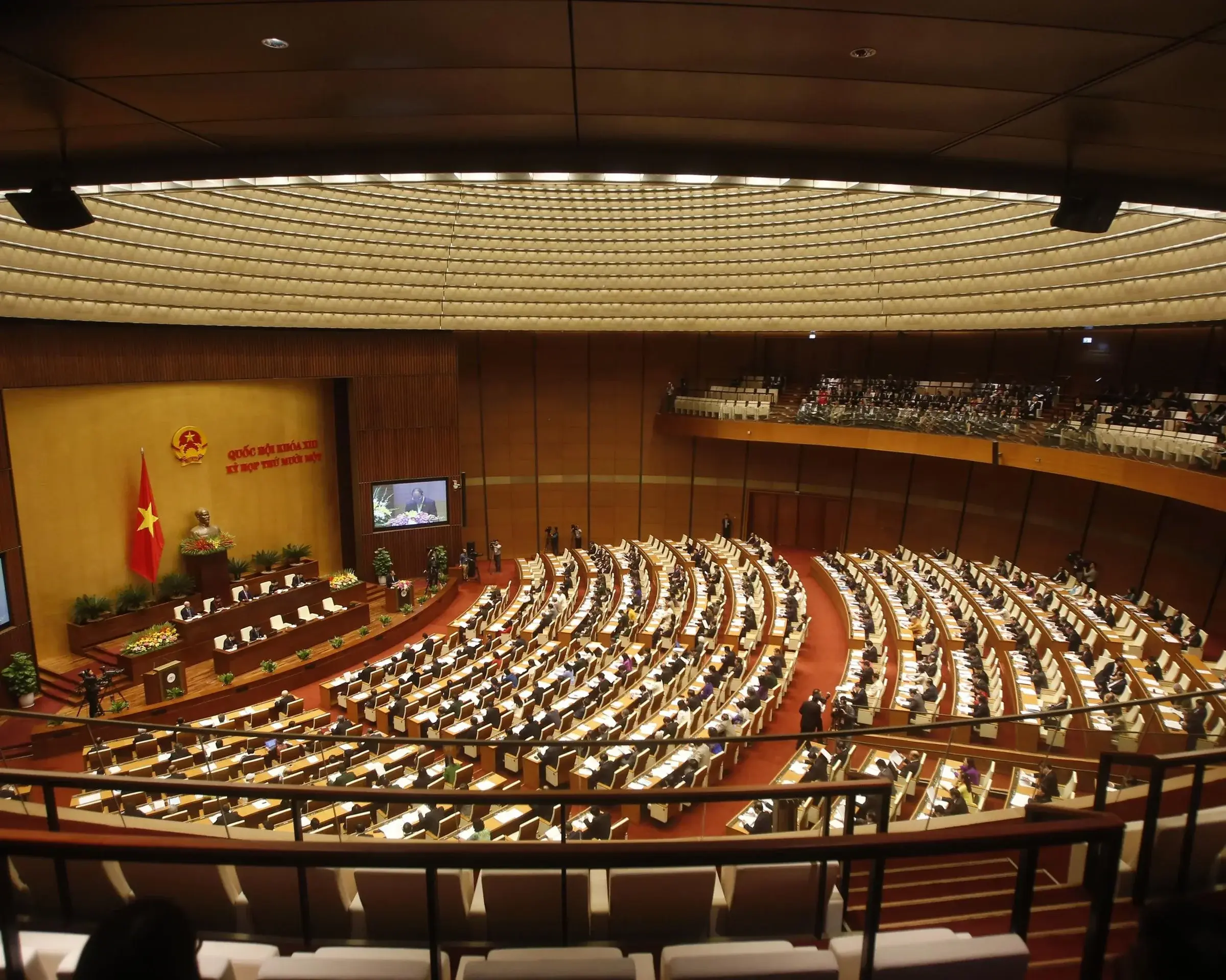

On the morning of April 12, 2026, Vietnam’s National Assembly voted to approve a resolution simultaneously exempting three fuel taxes, with 460 out of 500 delegates in favor — a 92.2% approval rate.Tuổi Trẻ For the first time, the environmental protection tax, special consumption tax, and value-added tax on fuel were all reduced to zero simultaneously. The resolution takes effect from April 16 through June 30, 2026, while also granting the Government flexibility to adjust if circumstances change.
This fiscal measure did not emerge under normal conditions. It is the result of compounding pressures: a sharp increase in global oil prices driven by tensions at the Strait of Hormuz, the near-total depletion of the Price Stabilization Fund after over a month of heavy drawdowns, and March’s CPI hitting a five-year high.
Three Taxes: How Much Per Liter?
Before the resolution took effect, three taxes accounted for a significant share of retail fuel prices. According to the Ministry of Industry and Trade (MOIT), the environmental protection tax represented approximately 2.7–6% of the base price, with a standard rate of VND 2,000/liter for gasoline. The special consumption tax accounted for about 6.7% of the base price, applied only to gasoline at a rate of 10%. The VAT represented roughly 7.4% of the base price, applied to both gasoline and diesel at 10%.CafeF Combined, the three taxes equaled nearly 20% of the retail price of RON95 gasoline before the exemption.
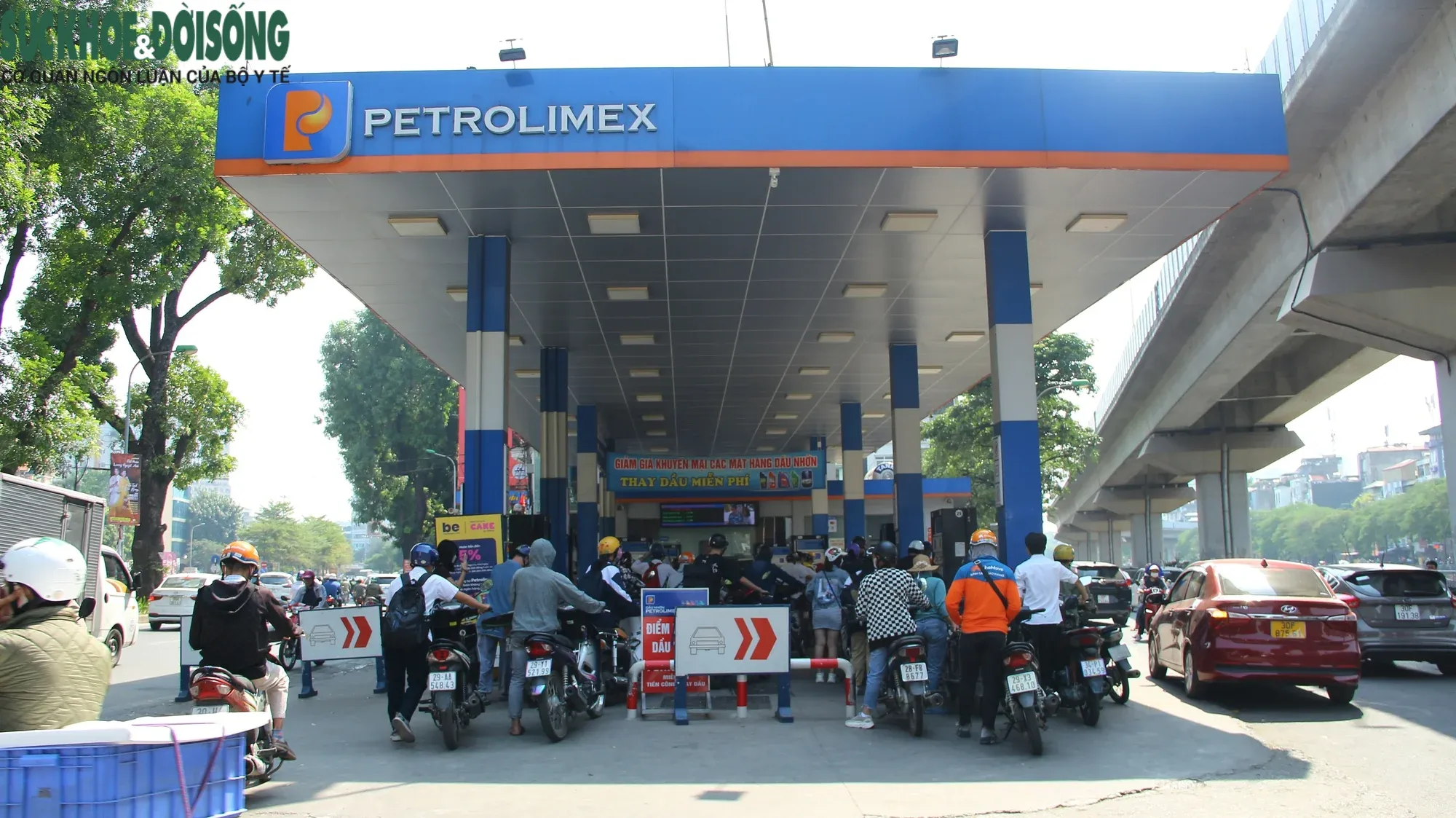
In practice, the Government had already begun reducing taxes from March 26, 2026, under Decision 482/QĐ-TTg, but that decision only applied through April 15.Government Policy Portal The National Assembly’s April 12 resolution extends the tax exemption by 2.5 months through June 30, 2026. For RON95 gasoline, the total tax exemption amounts to approximately VND 5,600/liter — equivalent to nearly 20% of the pre-exemption retail price. When first applied during the March 26 pricing period, E5 RON92 gasoline dropped by VND 4,749/liter to VND 23,320/liter, and diesel fell by VND 2,459/liter to VND 35,640/liter.
The Hormuz Shock: Brent Surges 57% in 5 Weeks
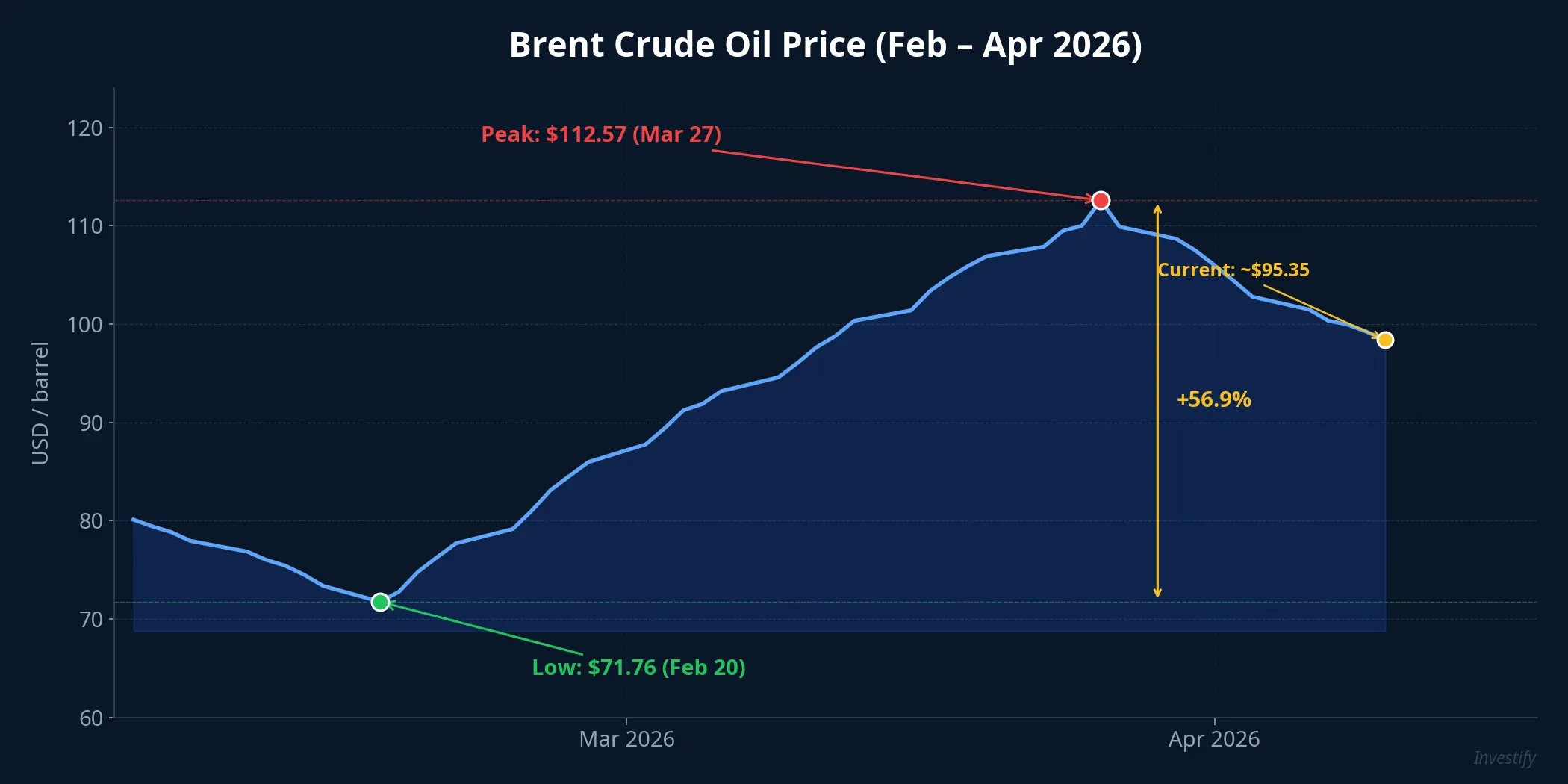
The direct cause forcing the Government’s hand lies in the global energy market. Brent crude rose from $71.76/barrel (February 20) to a peak of $112.57/barrel (March 27), a 56.9% increase in just five weeks, driven primarily by escalating tensions at the Strait of Hormuz.
Rising global oil prices pulled import costs higher, pushing domestic base prices up rapidly. The pass-through to domestic retail was stark: diesel surged from VND 18,870/liter (February 20) to a peak of VND 44,980/liter (April 3) — a 138% increase in six weeks. E5 RON92 gasoline rose from VND 18,630/liter to a peak of VND 30,110/liter (March 24) — a 62% increase in one month. Diesel rose more sharply than gasoline because it is more directly dependent on crude oil prices: no special consumption tax to offset, and fuel costs represent a higher share of the base price.
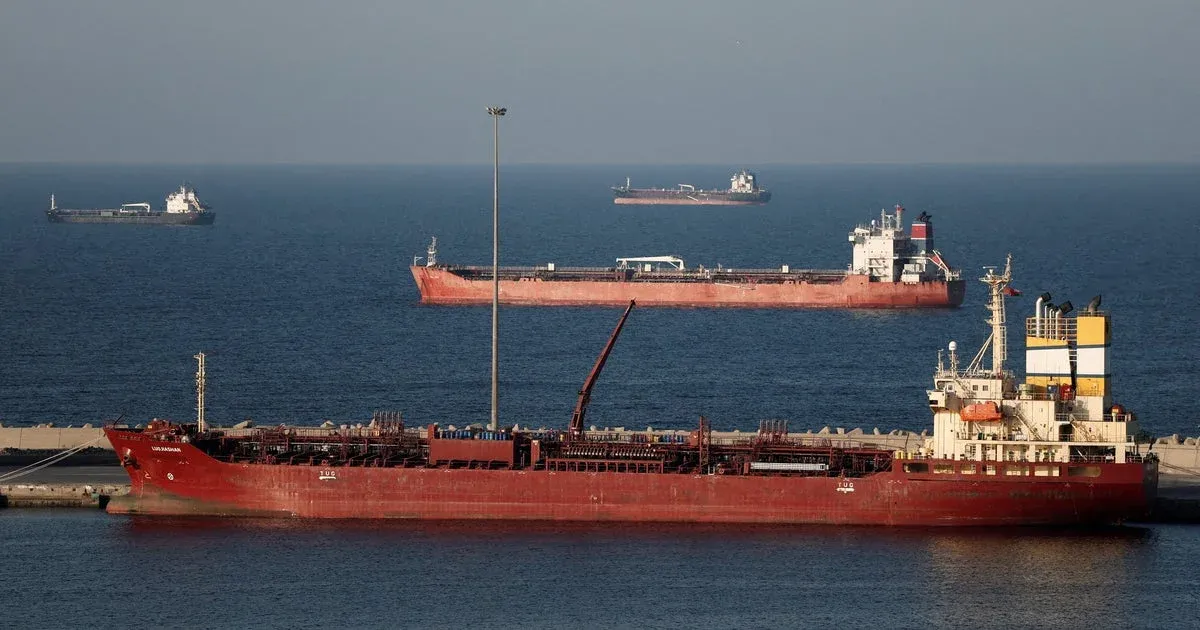
As of April 10, Brent had eased to $95.35/barrel following ceasefire signals, but remained 33% above late February levels. During the April 9 pricing period, diesel dropped to VND 33,730/liter as global prices cooled, but still stood 79% above late February levels. The price shock has lost intensity but has not ended.
The Stabilization Fund Lost 94.8% in One Month
Before turning to tax instruments, the first line of defense against the oil price shock was the Price Stabilization Fund. That line has collapsed.
At the end of Q3/2025, the fund held approximately VND 5,617 billion — its highest level in years.CafeF By late Q4/2025, the balance was virtually unchanged as global prices remained stable. But starting March 10, 2026, as oil prices surged, MOIT began drawing VND 4,000–5,000/liter from the fund for each liter of fuel sold.Government Newspaper By April 9, 2026, only approximately VND 293 billion remained — a 94.8% decline from the Q3/2025 peak.MOIT
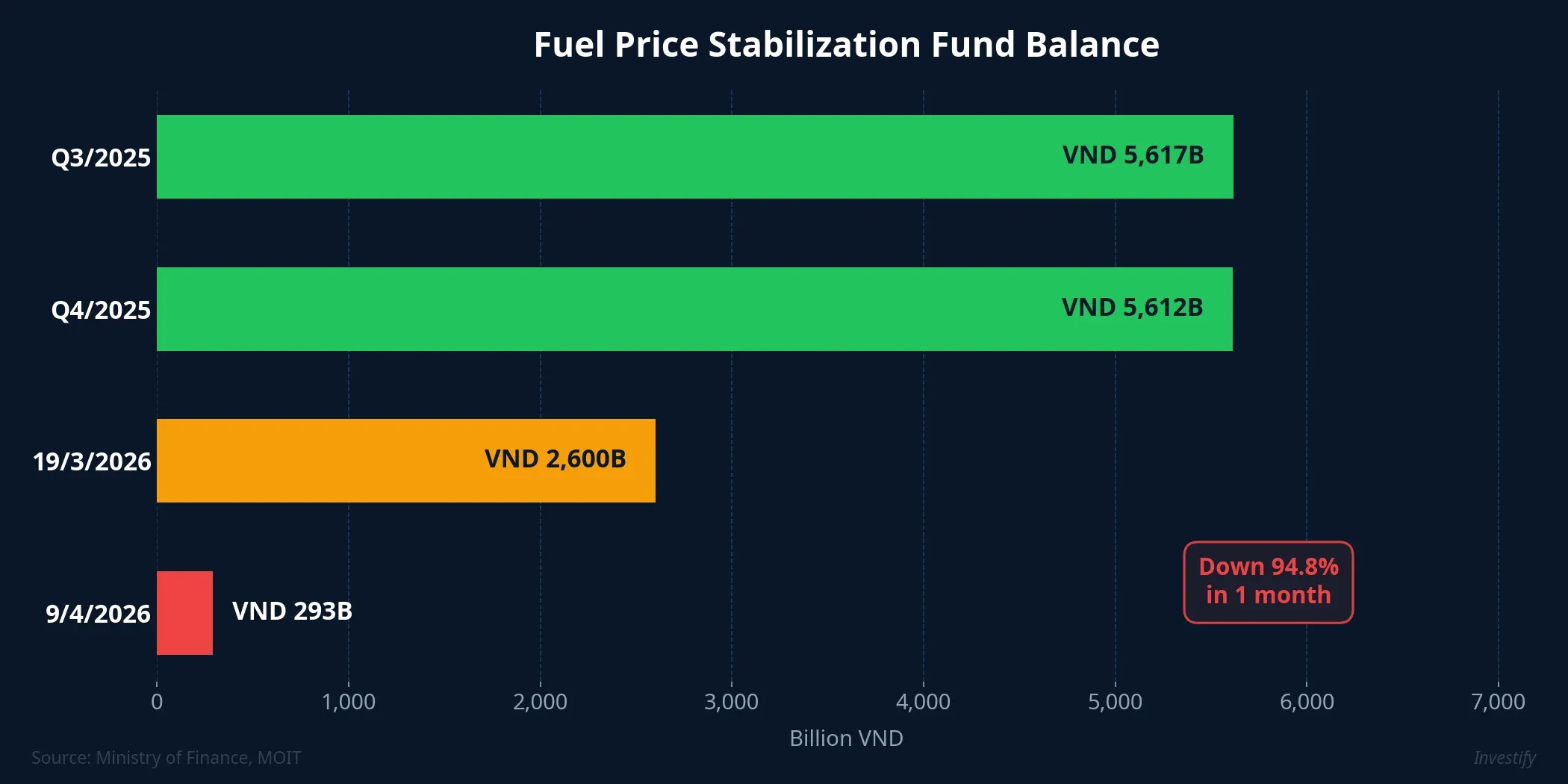
Over roughly one month (March 10 to April 9), the fund disbursed approximately VND 5,300 billion across nine pricing adjustments. The drawdown was so rapid that on March 27, the Prime Minister signed Decision 483/QĐ-TTg authorizing a VND 8,000 billion advance from the central budget to the Stabilization Fund — the first time in the mechanism’s history that a budget advance was required. The funds must be repaid within 12 months once market conditions stabilize.Government Newspaper
VND 7,300 Billion/Month: What Does It Buy?
The simultaneous tax exemption comes at a clear cost. According to the Government’s report to the National Assembly, average monthly revenue loss from the three taxes is approximately VND 7,300 billion.Financial Times Vietnam If applied for the full 2.5 months (April 16 – June 30), total revenue loss is estimated at VND 18,000–18,500 billion. Additionally, the MFN import tariff on fuel was previously reduced to 0%, adding an estimated VND 1,000 billion/month in lost revenue.Vietstock
In total, the budget faces approximately VND 8,000–9,000 billion/month in reduced revenue from all fuel-related measures. The Government plans to offset this through the 2025 budget surplus, reallocation of non-essential recurrent spending, and the flexible authority granted by the National Assembly to adjust tax rates if conditions change abruptly.
What does VND 7,300 billion/month buy? The answer is inflation control. March 2026 CPI rose 4.65% year-on-year — the highest in five years, with the transportation sector as the primary driver. Macro estimates suggest that if fuel prices fall 15–20% compared to a scenario where taxes were maintained, the short-term CPI impact would be approximately 0.25–0.35 percentage points. This effect ripples through transportation costs into food prices, construction materials, and services.
Who Benefits, and How Much Policy Space Remains?
The most direct beneficiaries are households and businesses with heavy diesel consumption: the transportation sector (fuel accounts for 30–40% of total costs), logistics (25–35% of costs), and agriculture. Diesel prices rose 138% during the crisis versus 62% for gasoline, so the tax exemption delivers a proportionally larger impact for these groups.
However, the tax cut only offsets part of the price shock. With Brent still at $95.35/barrel as of April 10 — 33% above late February levels — domestic retail prices have not returned to pre-crisis levels.
More critically, policy space is narrowing significantly. All three taxes are already at zero — there is nothing left to cut. The Stabilization Fund is nearly empty. If oil prices rise again due to renewed Middle Eastern conflict, the Government will need new instruments. The resolution only lasts 2.5 months: if Brent has not cooled meaningfully before June 30, the National Assembly will face an extension decision under mounting budget pressure.
Conclusion
The simultaneous exemption of three fuel taxes represents Vietnam’s strongest fiscal response to an energy shock since 2022. The Stabilization Fund lost 94.8% of its value in under a month, forcing the Government to switch to tax instruments and requiring an emergency National Assembly session to formalize the measure.
The trade-off is VND 7,300 billion in lost revenue per month, but the payoff is CPI containment and purchasing power protection during a period of extreme energy volatility. The decisive factor ahead is Brent crude: if Middle Eastern tensions continue to de-escalate and Brent holds below $90/barrel, the tax measure will deliver maximum effectiveness and may conclude on schedule by June 30. Conversely, if conflict reignites and pushes oil above $110, policy space will erode rapidly and the National Assembly will face a harder choice by mid-year. Three factors to watch in the coming month: Hormuz developments, April CPI data, and the disbursement pace of the VND 8,000 billion budget advance to the Stabilization Fund.