
Looking at the numbers, TCM’s April 13 session was a clear outlier. Thanh Cong Textile’s stock rose 6.84% to VND 24,200, near the ceiling price, on volume of 2.64 million shares — 2.6 times the 10-session average. Meanwhile, the VN-Index gained just 0.51% to 1,758.96 points with weak breadth: 140 gainers versus 187 losers. More notably, within the textile group itself, TCM stood virtually alone. VGT rose only 1.64%, TNG edged up 0.88%, while MSH and STK both dipped slightly. Capital was picking a company-specific story, not buying the sector wholesale.
Vertically Integrated Yarn-Weave-Garment Chain: A Structural Edge
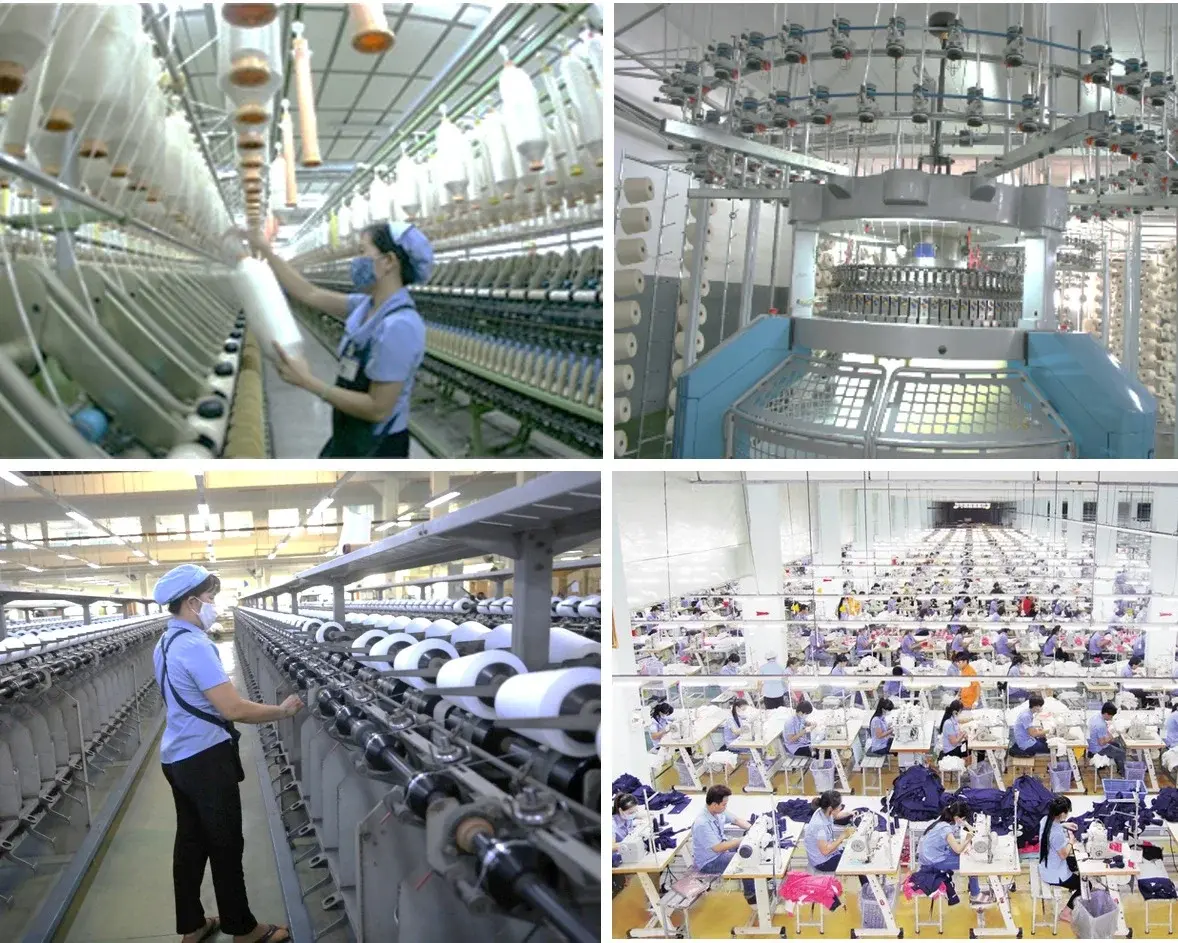
Most Vietnamese textile companies operate on a CMT (cut-make-trim) model — receiving materials and assembling to order, with thin margins. TCM belongs to a rare group that owns the entire production chain from yarn to weaving to finished garments.
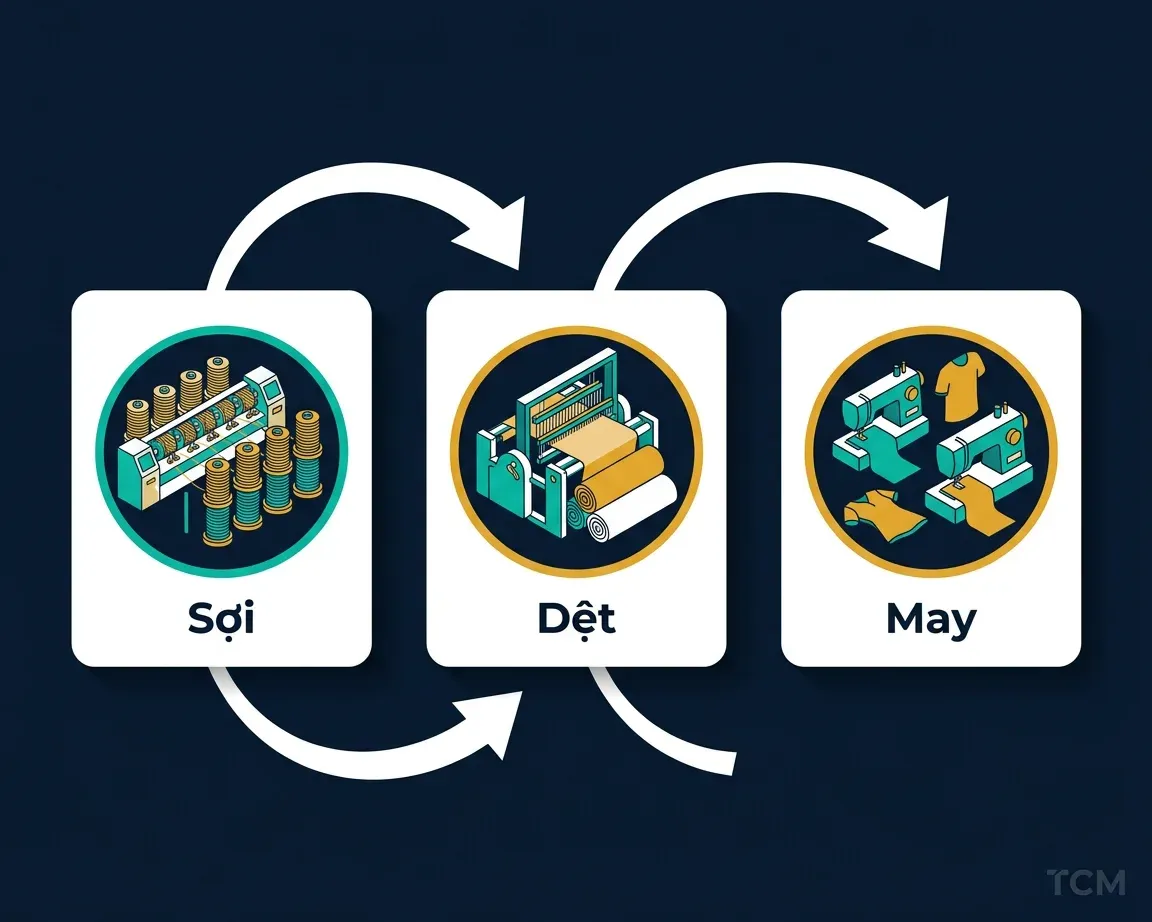
This advantage manifests in two ways. First, TCM controls input costs instead of depending entirely on imported fabric prices. Second, as the U.S. tightens rules of origin, companies that produce their own fabric and yarn can more easily meet compliance standards than pure CMT operators. The January 2026 revenue breakdown reflects this: garments accounted for 75.8%, fabric 16.2%, and yarn 7.6%.Tin nhanh CK
On the order front, TCM has nearly filled its Q1/2026 plan and secured approximately 58% of Q2/2026 orders.Tin nhanh CK In January 2026, revenue reached VND 365.6 billion (up 5% year-on-year) with after-tax profit of VND 22.6 billion.DNSE At the 2026 AGM, management set targets of VND 4,386 billion in net revenue (up over 20% from 2025) and approximately VND 293 billion in after-tax profit (up about 8%).Tin nhanh CK
Market Diversification: The U.S. Is Only 14%
A key factor making TCM less sensitive to tariff shifts than peers is its diversified export structure. Asia accounts for 73.6% of export revenue (South Korea 30.24%, Japan 20.61%), the Americas only 19.2% (with the U.S. at just 14.21%), and Europe 7.2%.Tin nhanh CK Compared to companies with 40–50% U.S. exposure, TCM has a clear buffer when tariffs fluctuate.
Vietnam Overtakes China in U.S. Apparel Market
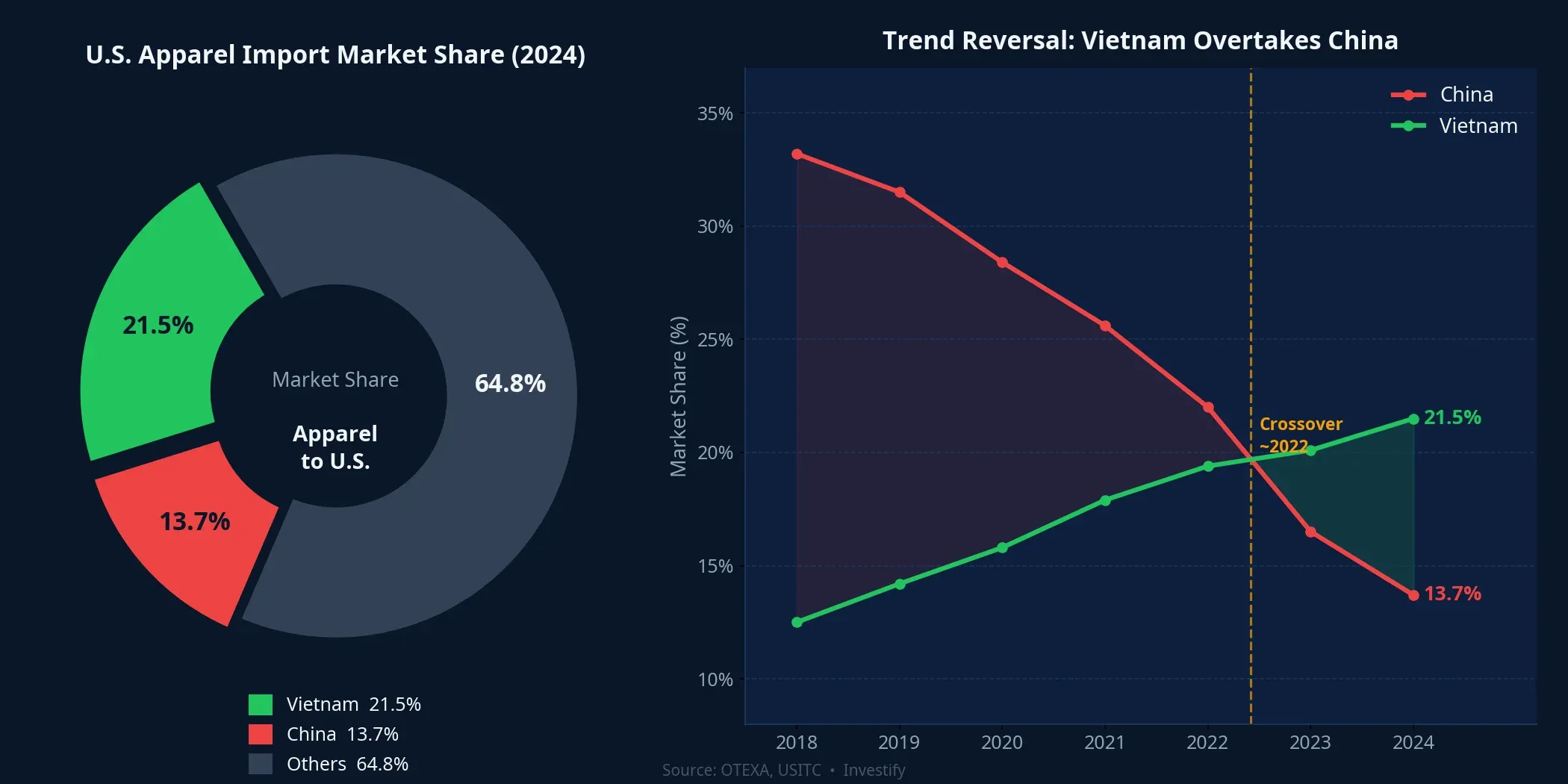
The broader industry picture underpins the TCM story. In the first two months of 2026, Vietnam held 19.3% of total U.S. textile import market share, maintaining the top position. For apparel specifically, Vietnam’s share reached 21.5% versus China’s 13.7% in 2024 — a gap that continues to widen.Dân trí
Q1/2026 results across major industry players show a positive trend. Vinatex (VGT) posted revenue of VND 4,554 billion (up 2%) but profit reached VND 355 billion, up 31% year-on-year — with profit margins reaching approximately 8–9%, double the 4% average of the previous five years.VCCI TNG recorded revenue of VND 1,952 billion, up 29% year-on-year.Tuổi Trẻ May Song Hong (MSH) targets 2026 revenue of VND 6,000 billion and pre-tax profit of VND 900 billion, up 10% from 2025, leveraging its Egypt factory that enables duty-free exports to the U.S.Mekong ASEAN
Tariffs: A 7.5–25% Gap Over China
The core driver of Vietnam’s textile advantage lies in tariff structure. Following the U.S. Supreme Court’s 6-3 ruling on February 20, 2026, which struck down tariff authority under IEEPA, Vietnamese goods now face a 15% tariff under Section 122 of the Trade Act of 1974.Vietnam BriefingHonigman
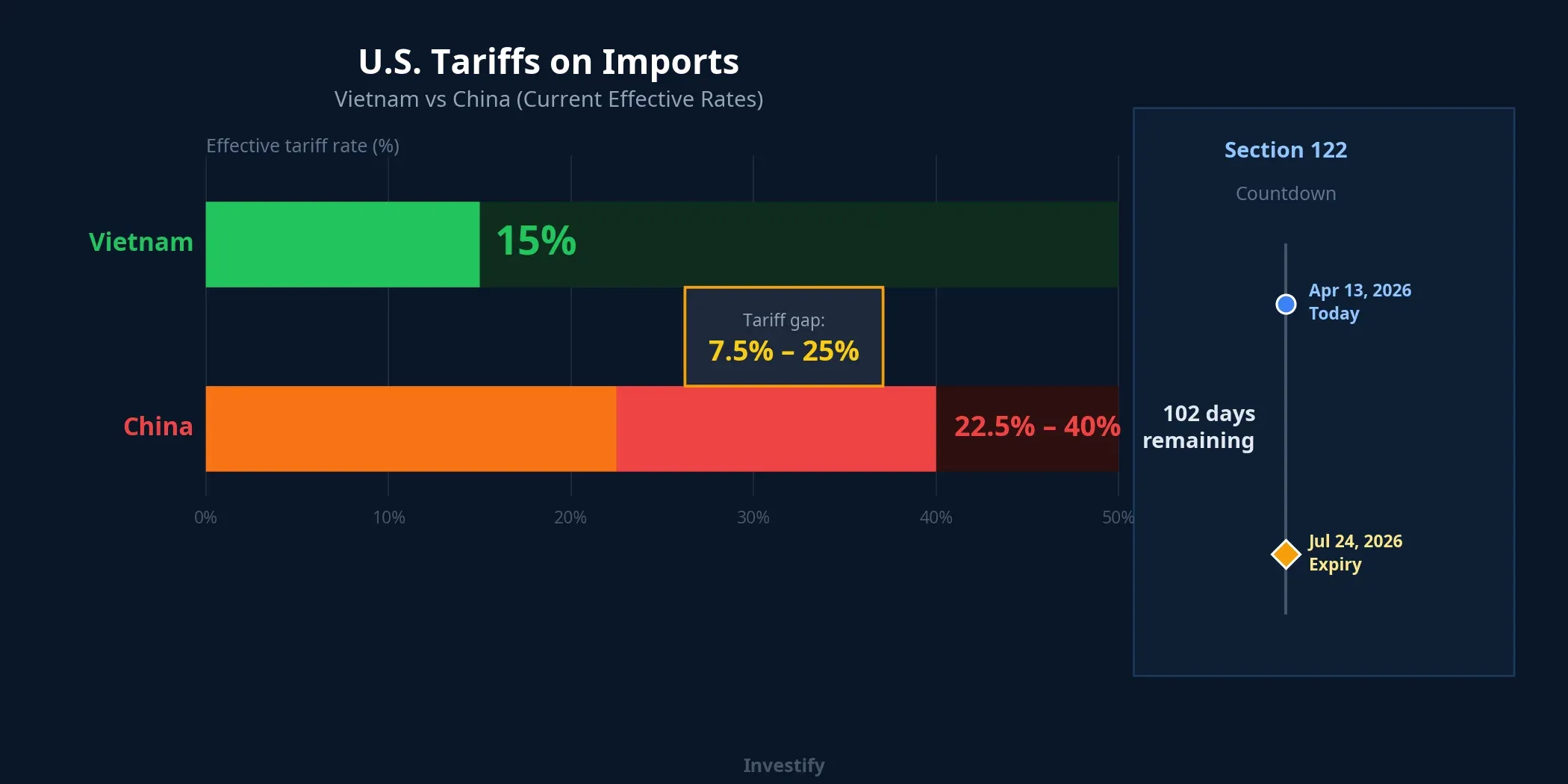
Meanwhile, Chinese goods face additional Section 301 tariffs of 7.5% to 25% depending on the product, bringing effective total rates to 22.5–40%.Tax Foundation The 7.5–25 percentage point gap represents a significant competitive advantage for Vietnamese goods. However, Section 122 only allows tariffs for a maximum of 150 days without Congressional approval, expiring around July 24, 2026. After that point, scenarios could shift in either direction: Vietnamese goods revert to lower MFN rates, or the administration finds new legal grounds to maintain or increase tariffs.
USTR launched a new Section 301 investigation on March 11, 2026, targeting 16 economies including Vietnam, related to “excess production capacity.”DWT On April 12, USTR opened another Section 301 investigation on forced labor targeting 60 economies, including Vietnam.VietnamFinance
Three Risks to Monitor
Transshipment and the 40% penalty tariff. Goods found to be transshipped through Vietnam — importing materials from China, performing minimal processing, then exporting to the U.S. — face penalty tariffs of up to 40%.Việt Luận Any such discovery could damage sentiment across the entire sector, even for compliant companies. This is precisely why TCM’s integrated supply chain has defensive value.
60% fabric dependency on China. Vietnam’s textile industry relies on approximately 60% of its fabric from China.Dân trí If the U.S. tightens rules of origin or imposes tariffs on imported components, TCM would be less affected thanks to its in-house fabric and yarn production, though not entirely immune.
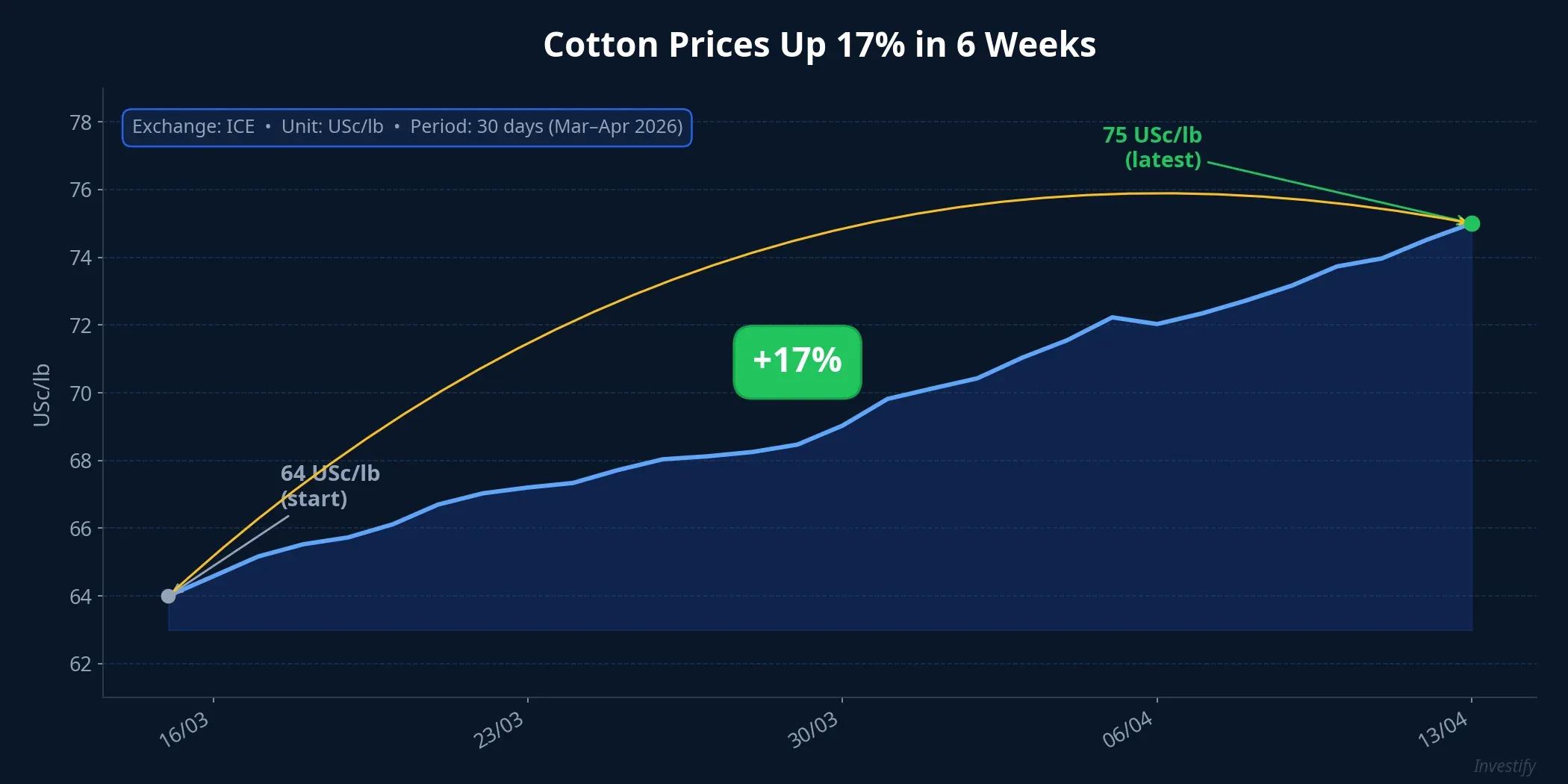
Cotton prices up 17% in six weeks. International cotton prices rose from 64.04 USc/lb on March 3 to 75.20 USc/lb on April 13, an increase of approximately 17%. Current price levels remain well below the 120+ USc peak of 2022, but if the trend continues, the improved Q1 profit margins could narrow in subsequent quarters.
Conclusion: Real Advantages, but Q1 Must Confirm
TCM is well-positioned thanks to three structural factors: a vertically integrated supply chain that controls costs and meets rules of origin; a diversified market mix with the U.S. at only 14% of revenue; and a largely filled Q1–Q2 order book. These factors explain why capital is choosing TCM rather than buying the textile sector broadly.
However, a 6.84% single-session gain also reflects rapidly elevated expectations. Risks from the new Section 301 investigations, transshipment concerns, and rising cotton prices warrant monitoring, but they do not reverse the core thesis — unless Section 301 findings lead to specific additional tariffs on Vietnam. Three factors worth watching over the next month: TCM’s Q1/2026 earnings report (expected late April), the Section 301 forced labor hearings (April 28–May 1), and cotton price trends.