
The head of the International Energy Agency (IEA), Fatih Birol, has just issued a stark warning: Europe has only about 6 weeks of jet fuel remaining. He called this “the biggest energy crisis we have ever faced,” stemming from the near-complete blockade of the Strait of Hormuz since February 28, 2026.ABC News
The bigger picture shows this is not just a European story. Global energy flows are being disrupted, and Vietnam — despite not being directly dependent on Hormuz — is feeling clear impacts through domestic fuel prices. Diesel has surged 65%, kerosene nearly 91% compared to pre-crisis levels. The question now is: what happens over the next 6 weeks?
Hormuz Blockade: Unprecedented Scale Since the 1980s

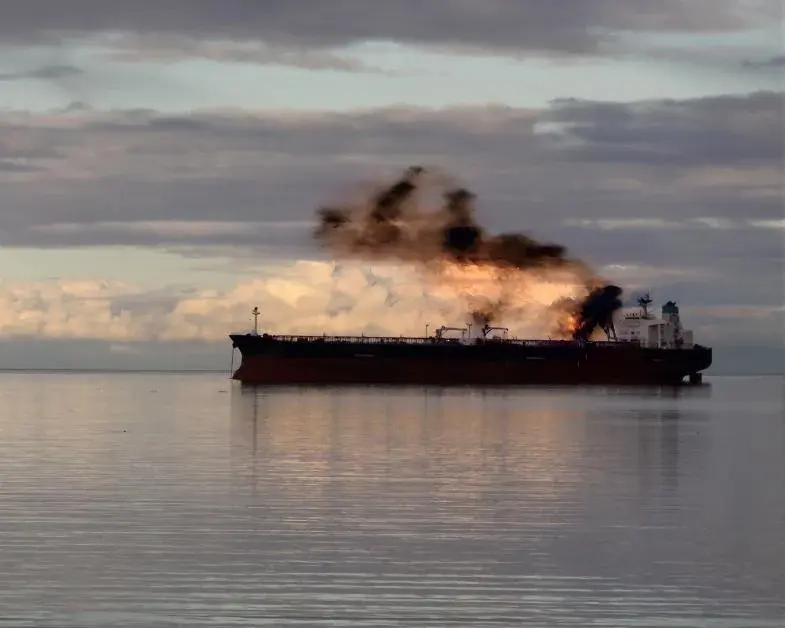
Crude oil and refined product flows through the Strait of Hormuz have dropped from approximately 20 million barrels per day to just 2 million barrels per day in March — a 90% decline.ABC News Over 110 oil tankers and 15 LNG carriers are stranded in the Persian Gulf, unable to pass through the strait.
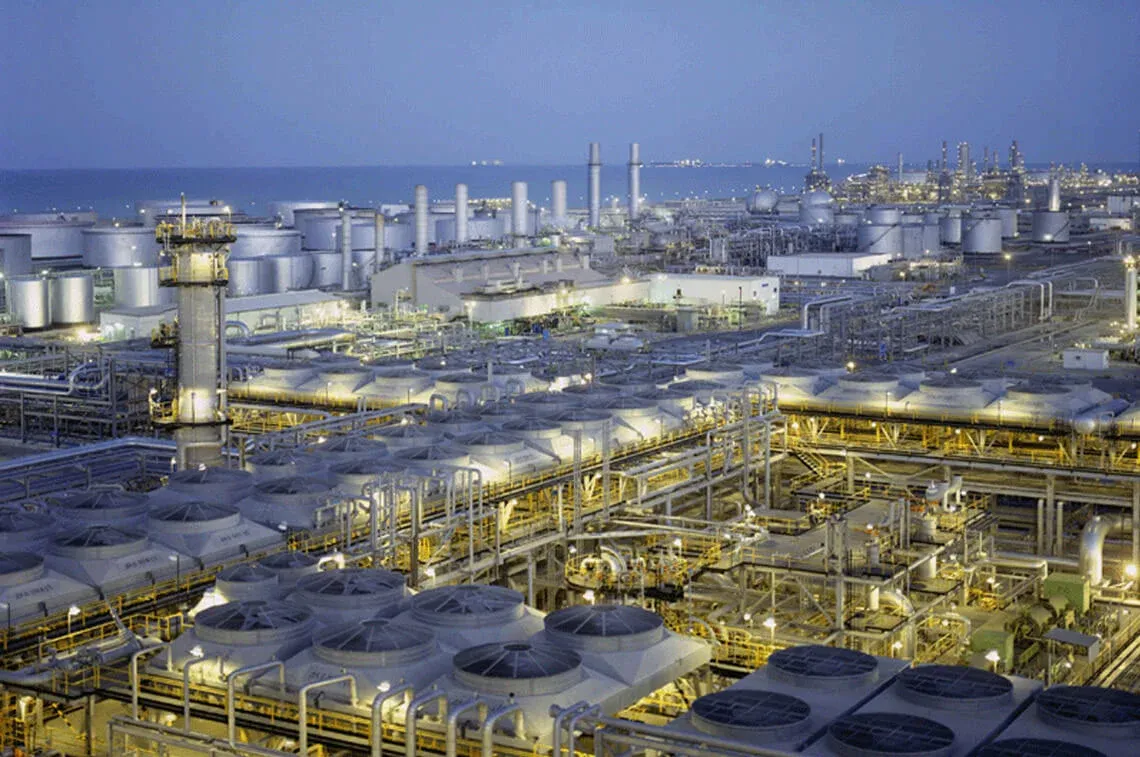
Europe depends on the Middle East for 75% of its jet fuel supply — the highest dependency rate among all transportation fuels.CNBC The root cause lies in Western countries shutting down older refineries over the past decade, while modern “mega refineries” like Kuwait’s Al-Zour (capacity: 615,000 barrels/day) took over the supply role. With Hormuz blocked, these facilities cannot export to Europe.Al Jazeera
Currently, Europe has only managed to replace about 50% of the lost Middle Eastern jet fuel, despite running domestic refineries at maximum capacity.Argus Media Airports Council International Europe warns that shortages could begin within 3 weeks if tankers do not resume operations soon.VisaVerge
European Airlines Already Cutting Flights
The crisis is no longer hypothetical. SAS has cancelled 1,000 flights in April. Ryanair CEO Michael O’Leary stated the airline may cut 10% of flights from May through July if the situation continues.CNBC Analysts forecast that capacity on Europe–Asia routes could drop 30–50% by June if Middle Eastern supply disruptions persist.Air Traveler
The IEA projects that European jet fuel inventories will hit a critical threshold of 23 days by June if losses exceed 50%.CNBC This means Europe would need to prioritize fuel allocation for essential routes while cutting tourism and cargo services.
Brent Crude: Up 36% but Correcting from Peak
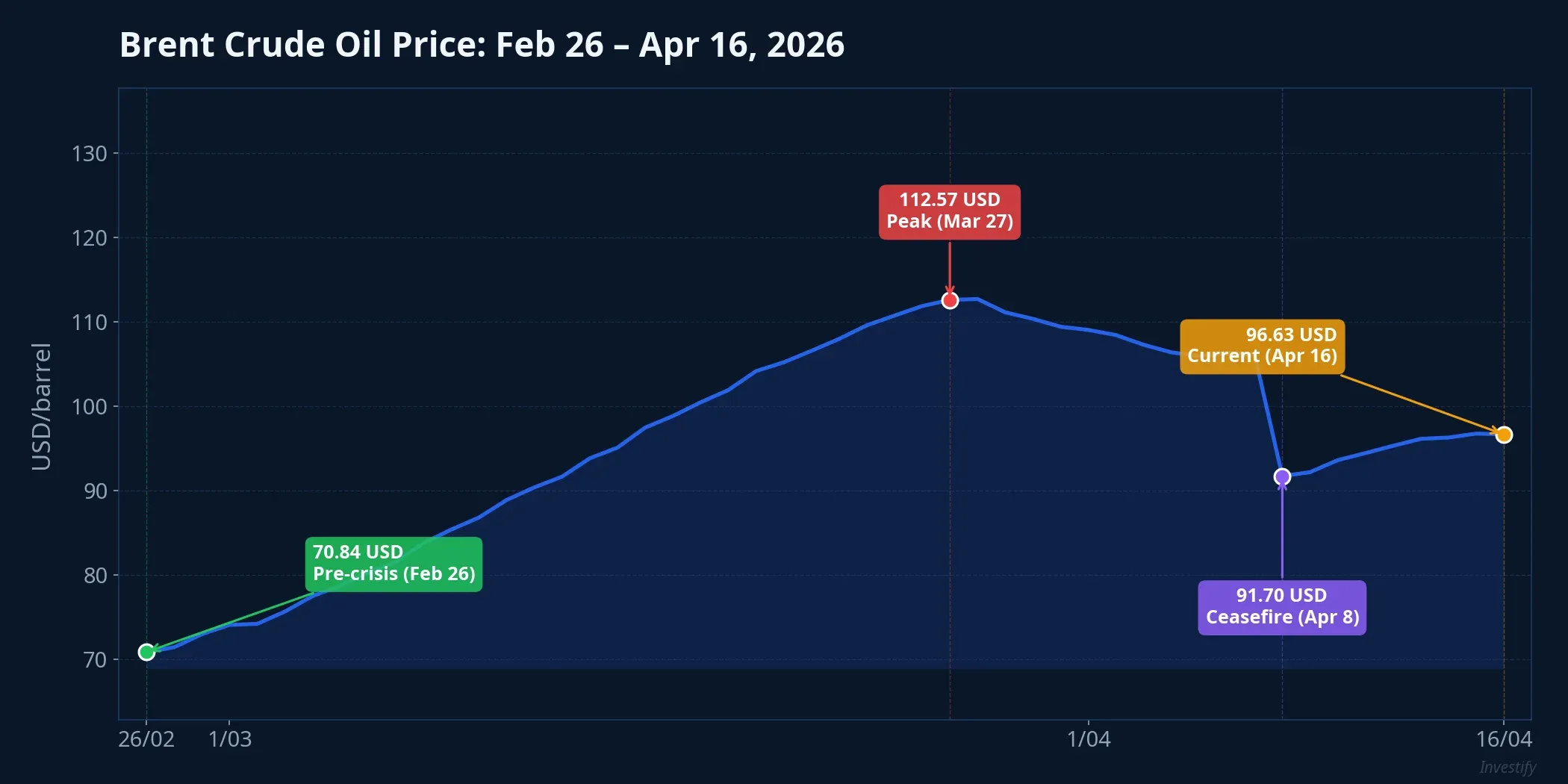
Brent crude closed the April 16 session at 96.63 USD/barrel, up 36.4% from the 70.84 USD/barrel level on February 26 — before the Hormuz blockade began. However, Brent has fallen 14.2% from its peak of 112.57 USD/barrel on March 27, primarily driven by negotiation expectations and some alternative shipping routes becoming operational.
The current price reflects a market weighing two opposing forces: supply remains severely disrupted (pushing prices up), while expectations of US–Iran negotiations and efforts to find alternative sources (pushing prices down). Asian naphtha prices reached 1,010 USD/ton on April 7, up 50.3% from early March — indicating pressure extends beyond jet fuel to all refined petroleum products.
US–Iran Negotiations: The Decisive Factor

The Hormuz crisis originated from the US–Iran conflict that erupted on February 28, 2026. On April 8, both sides reached a 2-week ceasefire agreement mediated by Pakistan, with Iran committing to the “full, immediate, and safe” reopening of the Strait of Hormuz.Al Jazeera Oil markets reacted positively, with Brent dropping 13.3% in a single session.
However, the Islamabad negotiation round on April 11–12 between Vice President JD Vance, Special Envoy Steve Witkoff, and the Iranian side failed to produce results.CNBC President Trump subsequently announced a naval blockade of Hormuz.CNN As of April 16, the White House said a second round of negotiations is being discussed, with Trump stating talks “could happen within 2 days.” Key unresolved issues include: control of Hormuz, Iran’s nuclear program, and Israel’s invasion of Lebanon.
Vietnam: Diesel Up 65%, Kerosene Up 91%
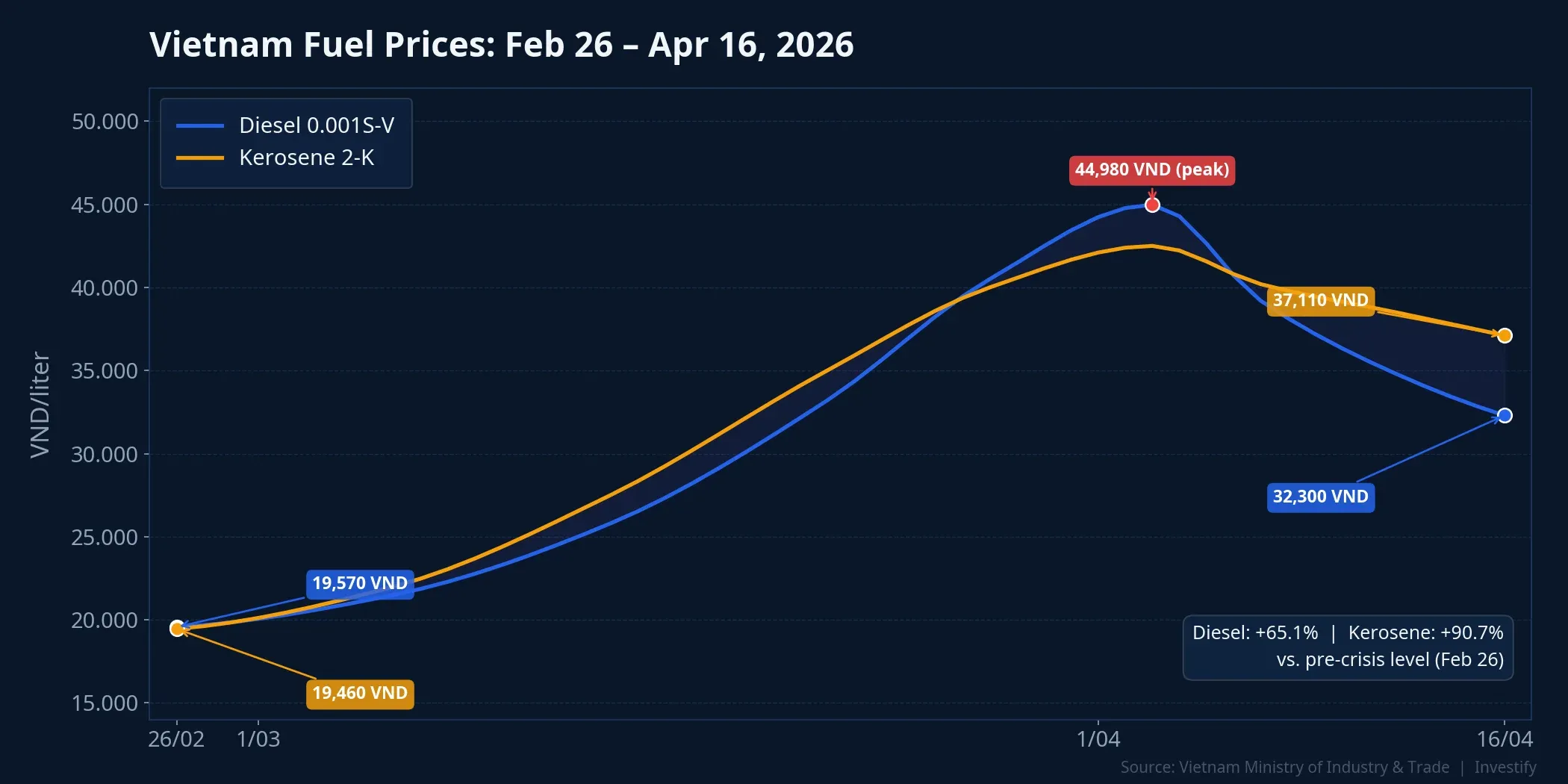
Global energy flows are shifting, and Vietnam is not immune. Diesel 0.001S-V prices on April 16 stood at 32,300 VND/liter, up 65.1% from the 19,570 VND/liter level on February 26. However, this has fallen significantly from the peak of 44,980 VND/liter on April 3, thanks to global oil price corrections following negotiation expectations and domestic policy interventions.
Kerosene 2-K — the product closest to jet fuel — was at 37,110 VND/liter, up 90.7% from pre-crisis levels. Meanwhile, E5 RON 92 gasoline was at 22,590 VND/liter, up only 15.7% due to a different tax structure. The large gap between diesel/kerosene and gasoline price increases reflects the true nature of this crisis: it is a middle distillates supply shock, not a simple crude oil shock.
On the policy front, the National Assembly enacted Resolution 19/2026/QH16, effective from April 16 to June 30, 2026, waiving environmental protection taxes on gasoline, diesel, jet fuel, kerosene, and fuel oil.Luật Việt Nam Additionally, the fuel price stabilization fund allocated 5,000 VND/liter for diesel during the early April adjustment period.Thanh Niên
3 Scenarios for the Next 6 Weeks
Scenario 1: EU scrambles independently, sourcing fuel from the US and Africa. The European Commission activates emergency plans, signing contracts for jet fuel and crude from the US Gulf Coast, Nigeria, and Angola. Spot market purchases push Brent to the 100–108 USD/barrel range. Vietnam’s diesel could return to 35,000–40,000 VND/liter, kerosene could exceed 40,000 VND/liter, putting pressure on CPI through transportation costs. This scenario is already partially underway — the EU has begun taking action, but the question is whether alternative sources can be mobilized fast enough and at sufficient scale.
Scenario 2: US–Iran negotiations succeed, Hormuz partially reopens. The 110+ stranded oil tankers begin moving, creating rapid downward pressure on prices. Brent could fall to the 78–85 USD/barrel range within 2–3 weeks, similar to the 13.3% single-session drop when ceasefire expectations rose. Vietnam’s diesel could decline to 22,000–25,000 VND/liter, inflation pressure would ease, and the State Bank of Vietnam would gain more room to maintain low interest rates. Probability is difficult to assess precisely: key sticking points (Iran’s nuclear program, Lebanon) are highly complex, and history shows negotiations involving Iran’s nuclear program typically last months, not weeks.
Scenario 3: Prolonged deadlock, oil surpasses 100 USD. No agreement is reached before the end of April. European jet fuel inventories hit the critical 23-day threshold by June. Airlines cut 30–50% of capacity on Europe–Asia routes. Brent surpasses 105–115 USD/barrel and remains elevated. For Vietnam: diesel could revisit the 40,000–45,000 VND/liter peak, the stabilization fund would deplete rapidly (the 5,000 VND/liter diesel subsidy is unsustainable long-term), road transportation costs would rise 15–25% and pass through to consumer prices, and domestic airlines would face severe margin pressure.
Three Signals to Watch
The outcome of the Hormuz crisis will be determined by diplomacy, not markets. Therefore, rather than predicting next week’s oil price, commodity investors should focus on three specific signals.
First, the US–Iran negotiation round at Islamabad: if an official schedule is announced within the next 48 hours, Scenario 2 becomes more likely; otherwise, markets will quickly price in Scenario 3. Second, the rate of decline in European jet fuel inventories through IEA’s weekly updates — if drawdowns accelerate beyond forecasts, upward pressure on global oil prices will intensify significantly. Third, the number of European flight cancellations: each major cancellation wave is a direct signal of supply severity.
For Vietnam’s market specifically, beyond global oil prices, the domestic fuel price adjustment cycle (every 7 days) and stabilization fund spending levels are the two most direct indicators of consumer price pressure in the coming weeks.