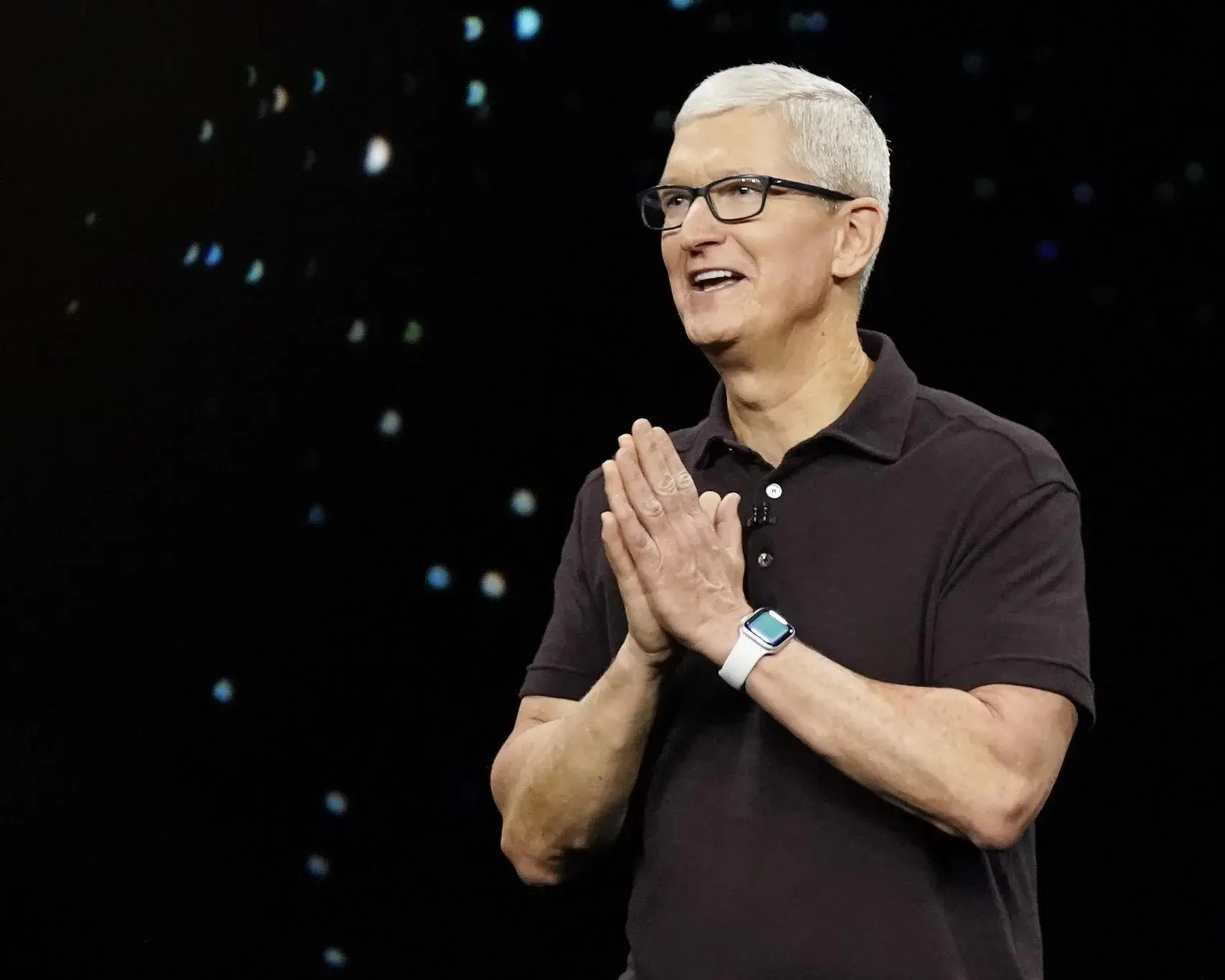

On April 20, 2026, Apple officially announced that Tim Cook will step down as CEO on September 1, 2026 and become Executive Chairman; his successor is John Ternus, Senior Vice President of Hardware Engineering, age 50, with 25 years at Apple.Apple Newsroom On the same day, Arthur Levinson stepped down as non-executive Chairman after 15 years to move into the Lead Independent Director role.
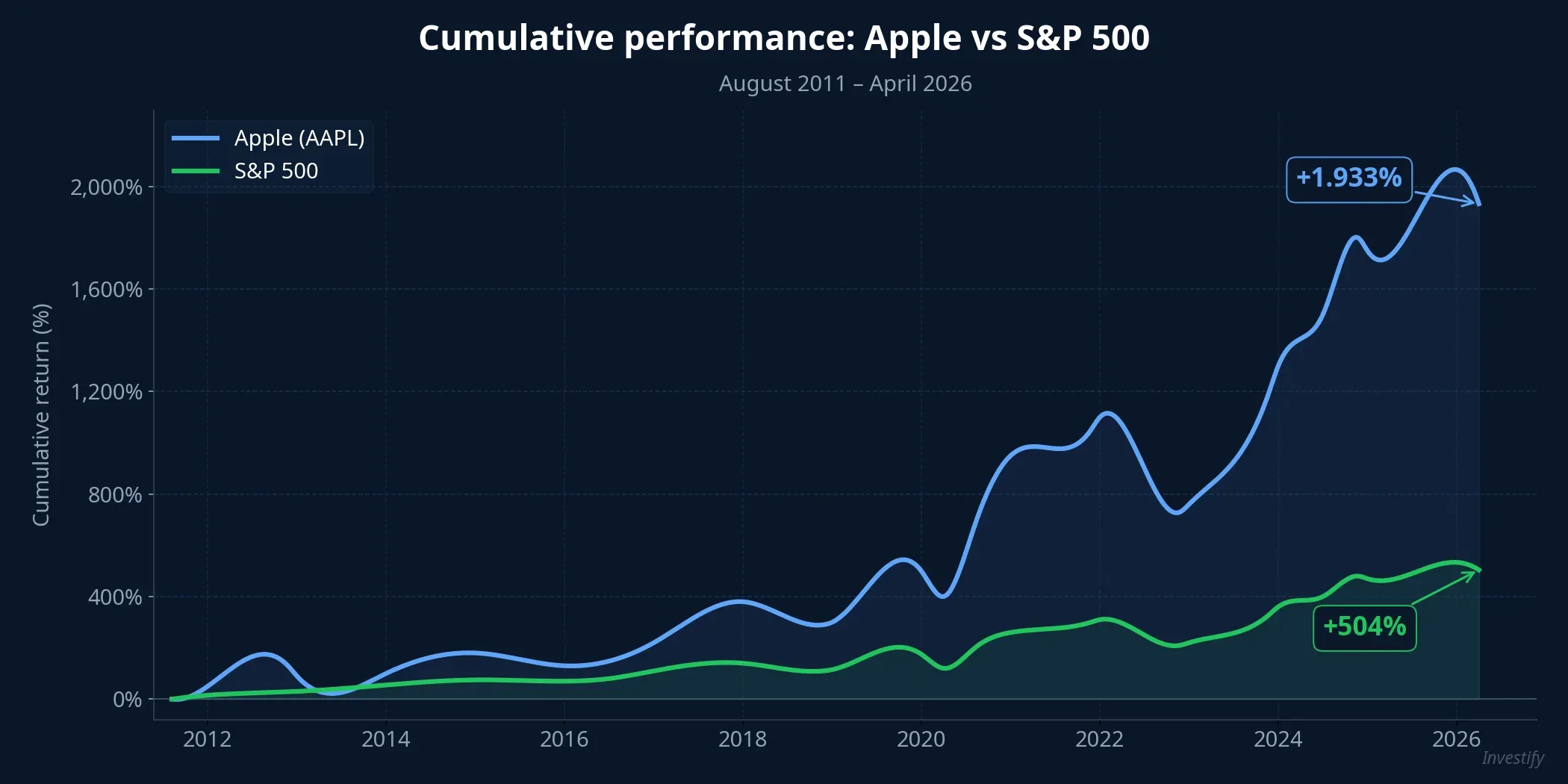
Looking at the numbers, Cook’s tenure ranks among the largest value-creation runs in US corporate history. From August 2011 to April 2026, Apple’s market cap went from roughly $350 billion to around $4 trillion, and AAPL shares rose about 1,933%, compared with roughly 504% for the S&P 500 over the same period.CNBC Today’s handover is therefore more than a personnel headline: it’s an opportunity for Vietnamese individual investors to revisit a long-hold playbook that has survived four different market cycles.
Fifteen years under Cook in four numbers
Cook took the CEO role on August 24, 2011, right after Steve Jobs stepped down for health reasons.CNBC Four framing numbers across 15 years show the scale of change:
- Market cap: from ~$350B to ~$4T, more than 11x.
- Revenue: from ~$108B (FY2011) to ~$416B (FY2025), nearly 4x.
- Stock: +1,933% total price return (excluding dividends), equivalent to an average growth rate of roughly 22% per year for 15 years.
- Shares outstanding: down more than 41% since the buyback program began in 2013.CNBC
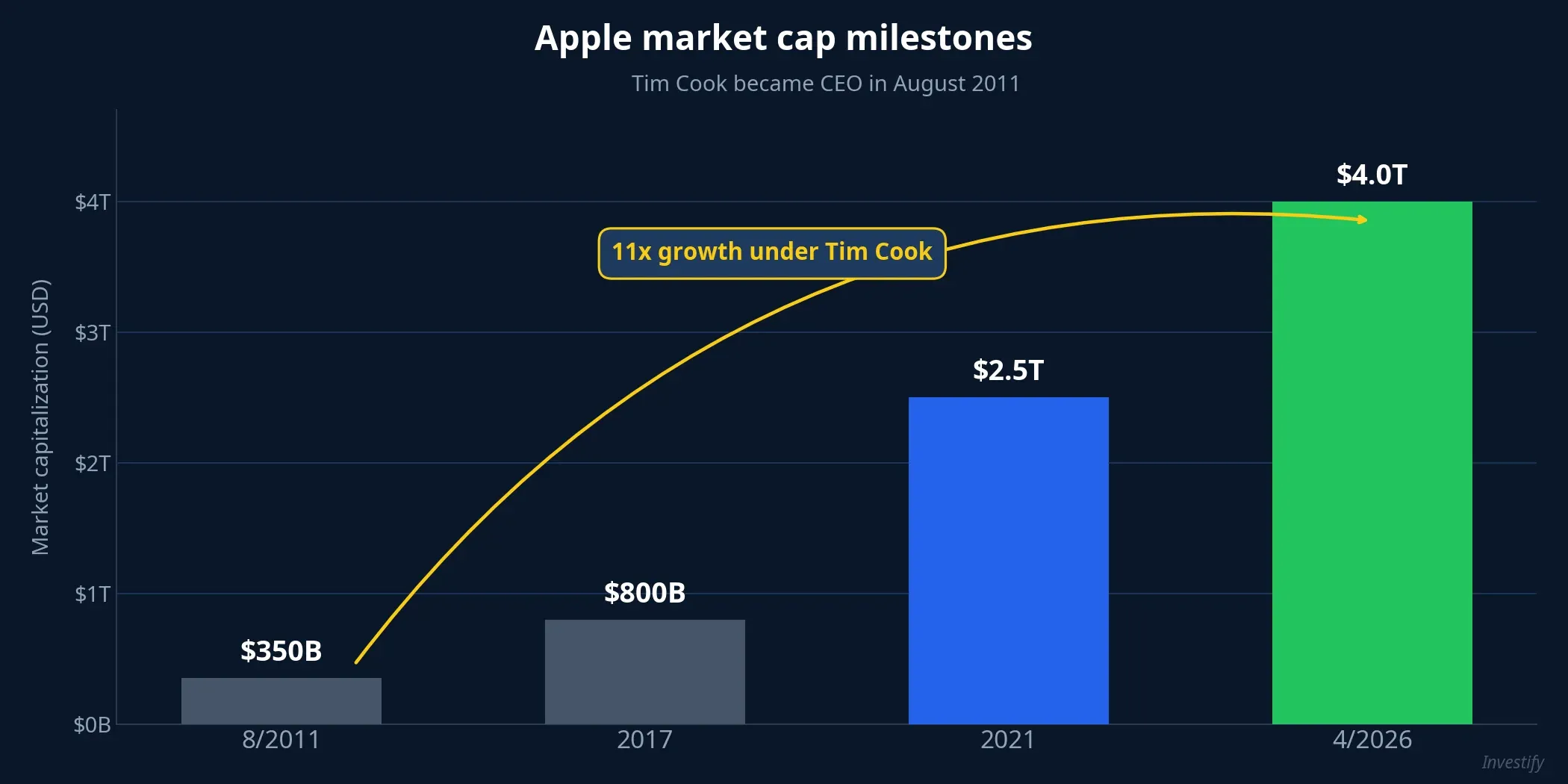
What stands out in these four numbers is the gap between revenue growth (nearly 4x) and market cap growth (more than 11x). The gap isn’t random multiple expansion; it reflects three structural shifts: margins lifted by the services mix, steadily shrinking share count, and a decade of low interest rates that raised P/E multiples across the entire tech sector.
Three phases of growth
Cook’s 15 years break cleanly into three phases, each powered by a different growth engine.
Phase 1 (2011–2017): iPhone-as-a-platform. Revenue went from ~$108B to ~$229B on the iPhone 4S to iPhone 7 cycle. Cook didn’t launch a new iconic product, but turned the iPhone supply chain into a global-scale operating machine. Apple Watch, launched in 2015, planted the seed for wearables.
Phase 2 (2017–2021): Services plus wearables plus buyback. Apple crossed $2 trillion in market cap in 2020.CNBC Services (App Store, iCloud, Apple Music, AppleCare) nearly doubled as a share of revenue, bringing higher margins than hardware. AirPods plus Apple Watch made wearables a tens-of-billions line. And on capital allocation, the buyback program ran at unprecedented scale: cumulatively since 2012, Apple spent over $650 billion repurchasing shares, the largest program in tech.
Phase 3 (2021–2026): Services-first plus AI plus Vision Pro. Market cap moved from ~$2.5T to ~$4T. In Q2 2024, Apple announced a $110 billion buyback, the largest single authorization in US market history at the time.CNBC Vision Pro opened the spatial computing era; Apple Intelligence brought AI into the ecosystem. FY2025 revenue reached ~$416B, with iPhone still around 59% and Services about 21%, a clear two-pillar structure.
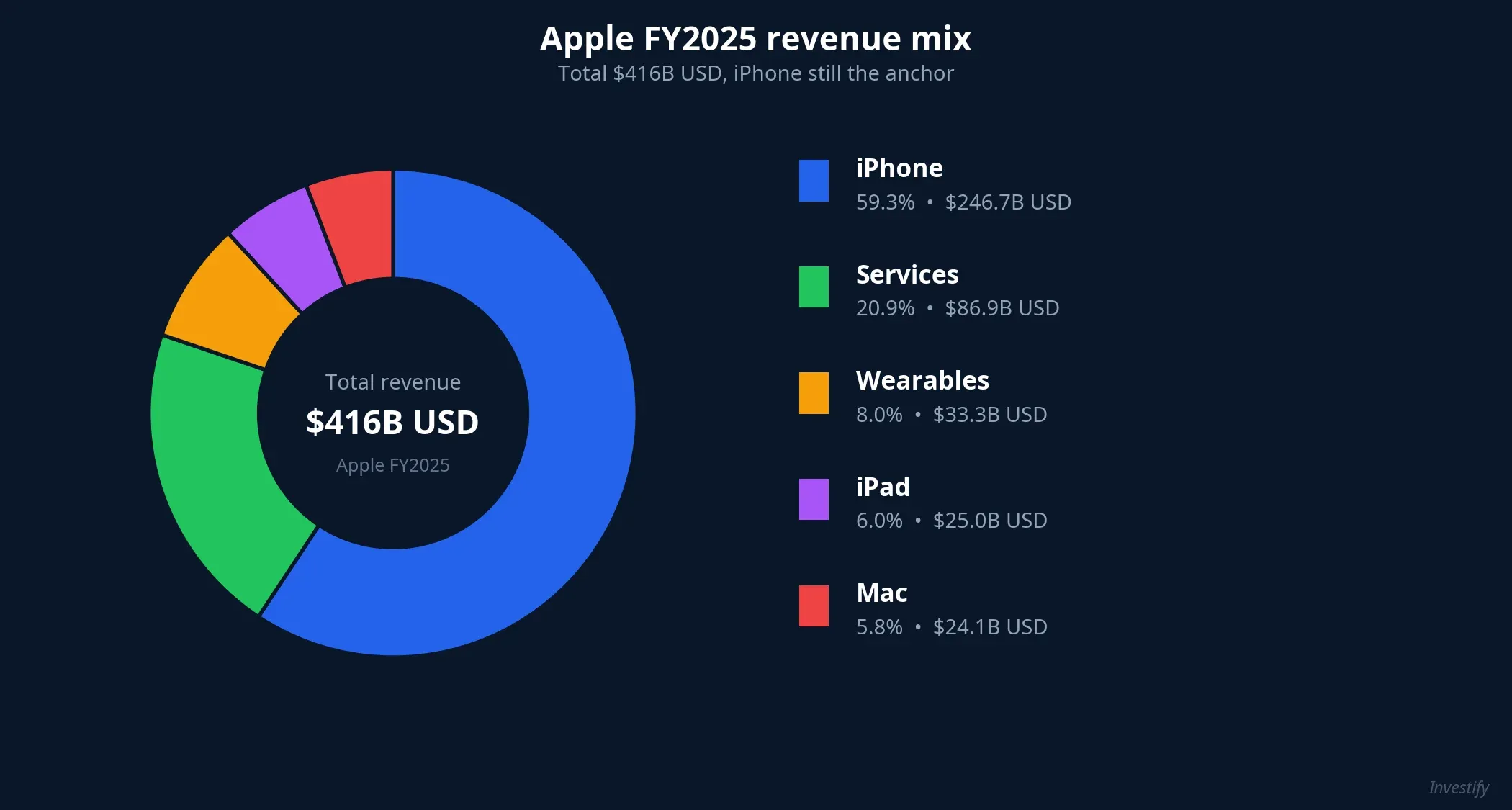
These three phases show Cook’s contribution is the ability to continually reposition the growth engine as an old motor slows. The key question for Ternus isn’t “is he the next Jobs”, but “can he keep the discipline of shifting the center of gravity when needed”.
John Ternus: the successor after 25 years inside Apple
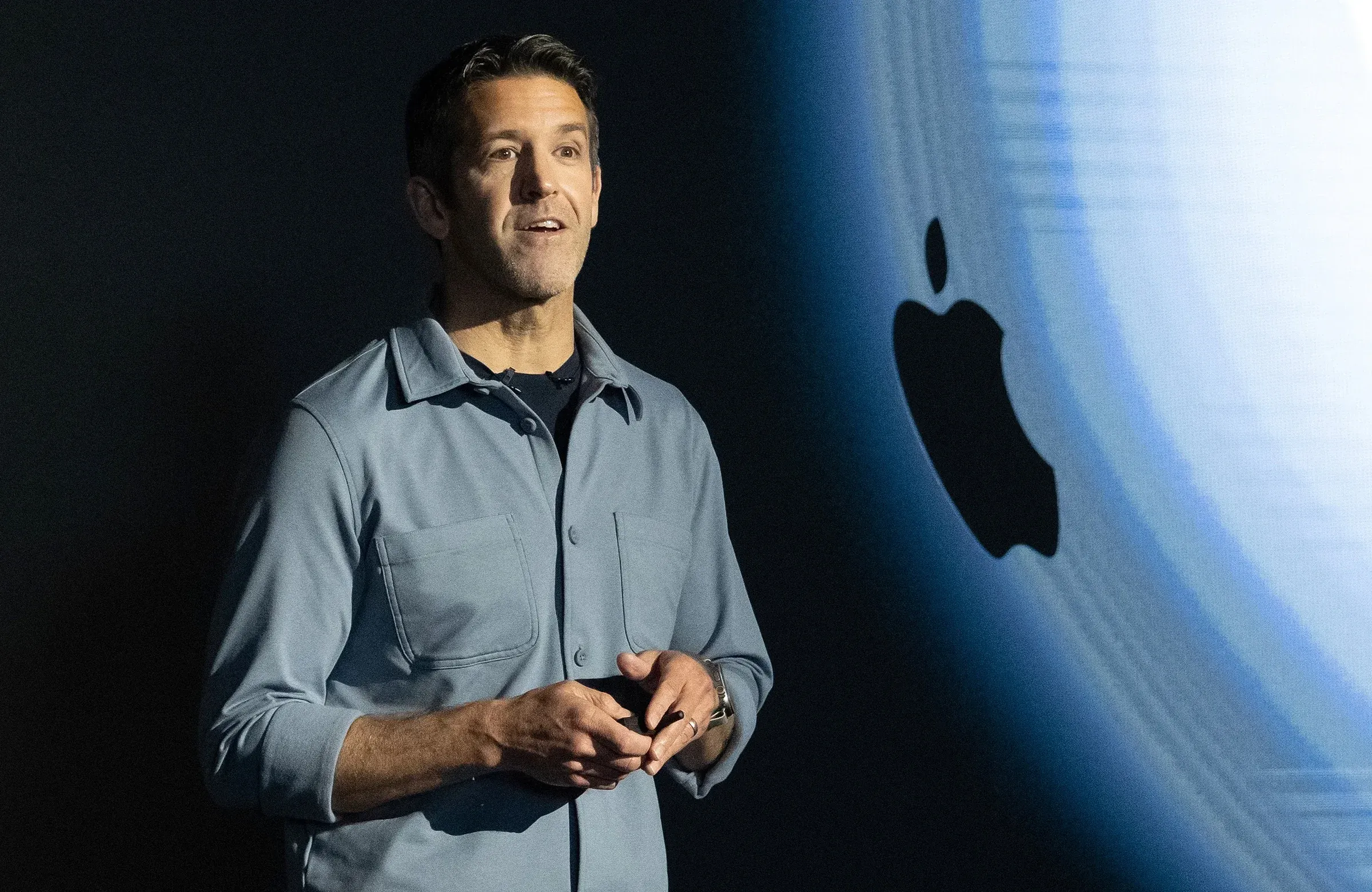
Ternus joined Apple in 2001, starting on the Apple Cinema Display design team, then moving to iPad and high-end Mac. In 2013 he became VP of hardware engineering; in 2021 he was promoted to SVP Hardware Engineering. For the past five years, Ternus has led engineering for iPhone, iPad and Mac, that is, the entire hardware stack generating roughly 80% of Apple’s current revenue.Apple Newsroom
The clearest difference from Cook is background: Cook came from operations and supply chain, while Ternus is a mechanical engineer (University of Pennsylvania, 1997). This is the “promote from inside” pattern Apple typically uses, biased toward continuity rather than strategic reinvention. Cook will continue working alongside Ternus through the summer of 2026 to ensure a smooth handover, and retains the Executive Chairman role with authority to step in strategically when needed. The pattern resembles Microsoft’s Ballmer-to-Nadella transition, not Apple’s Jobs-to-Cook move made while Jobs was gravely ill.
Why a handover at the peak isn’t always a stock-price peak
In 2011 when Jobs handed the role to Cook, plenty of analysts were valuing Apple as “a company losing its soul”. Fifteen years later, market cap is up 11x. That history is a useful counter to the reflex to “sell the CEO news”.
Three factors long-term investors should watch over the next 12–24 months:
- iPhone cycle continuity: Ternus personally signed off on every recent iPhone generation, so near-term product risk is low.
- AI roadmap: Apple Intelligence still doesn’t compete directly with OpenAI or Google, and this is Ternus’s biggest strategic test.
- Capital allocation policy: Cook made buybacks the dominant tool; Ternus may choose M&A or higher R&D spending instead of maintaining $100B+ repurchases.
The central thesis still holds: Apple’s business model does not depend on a single individual. The main risk is AI. If over the next 12–18 months Apple Intelligence fails to close the gap, the P/E multiple could be repriced even without a revenue decline.
Lessons for quality Vietnamese stocks
An average 22% annual return over 15 years is only realized if the investor doesn’t sell through a string of noisy episodes: battery throttling in 2017, US-China tariff tension in 2019, COVID in 2020, inflation and rising rates in 2022. Each episode offered a “reasonable” reason to take profits. The people holding today are the ones who didn’t.
Looking at quality Vietnamese stocks over the same window, VIC, FPT, HPG and MWG have all gone through multiple 30–50% drawdowns, yet still produced 10x–20x compounders for investors who held continuously. VIC just set a new all-time high of 191,000 VND in the April 20, 2026 session. The right question for someone who has owned it since 2015 isn’t “should I take profit now”, but “is the ownership thesis on this company still intact”.
FPT, HPG and MWG are all heading toward a generational leadership handover within the next 5–10 years. The Apple case suggests three risk-reducing signals for long-term investors: a multi-year planned transition, an internally-groomed successor, and a business model not dependent on any single individual. When all three show up together, the probability that “handover day” coincides with “stock-price peak” drops materially. Three questions to revisit regularly on any quality stock you own: is the competitive advantage eroding, is management’s capital allocation effective, and is the next generation of leadership in place.
Signals to watch
Three concrete markers in the next two months will answer most of “how is the market rating Ternus”:
- Trading session April 21, 2026 (US time): AAPL’s first-session reaction is a short-term sentiment gauge, not a strategic verdict.
- Q2 FY2026 earnings report (expected late April to early May 2026): likely to come with a new buyback authorization, the first capital-allocation test for Ternus.
- WWDC, June 2026: Apple Intelligence roadmap under the new leadership. This is the defining event for the 12-month AI thesis.
For Vietnamese individual investors, today’s Apple news is a periodic reminder rather than a call to action: the “ownership beats timing” model only works with companies that have planned transitions, internally-groomed leadership, and no single-person dependency. The right question for your own portfolio isn’t “is Apple still a good stock”, but “are the stocks you own passing those same three tests”.