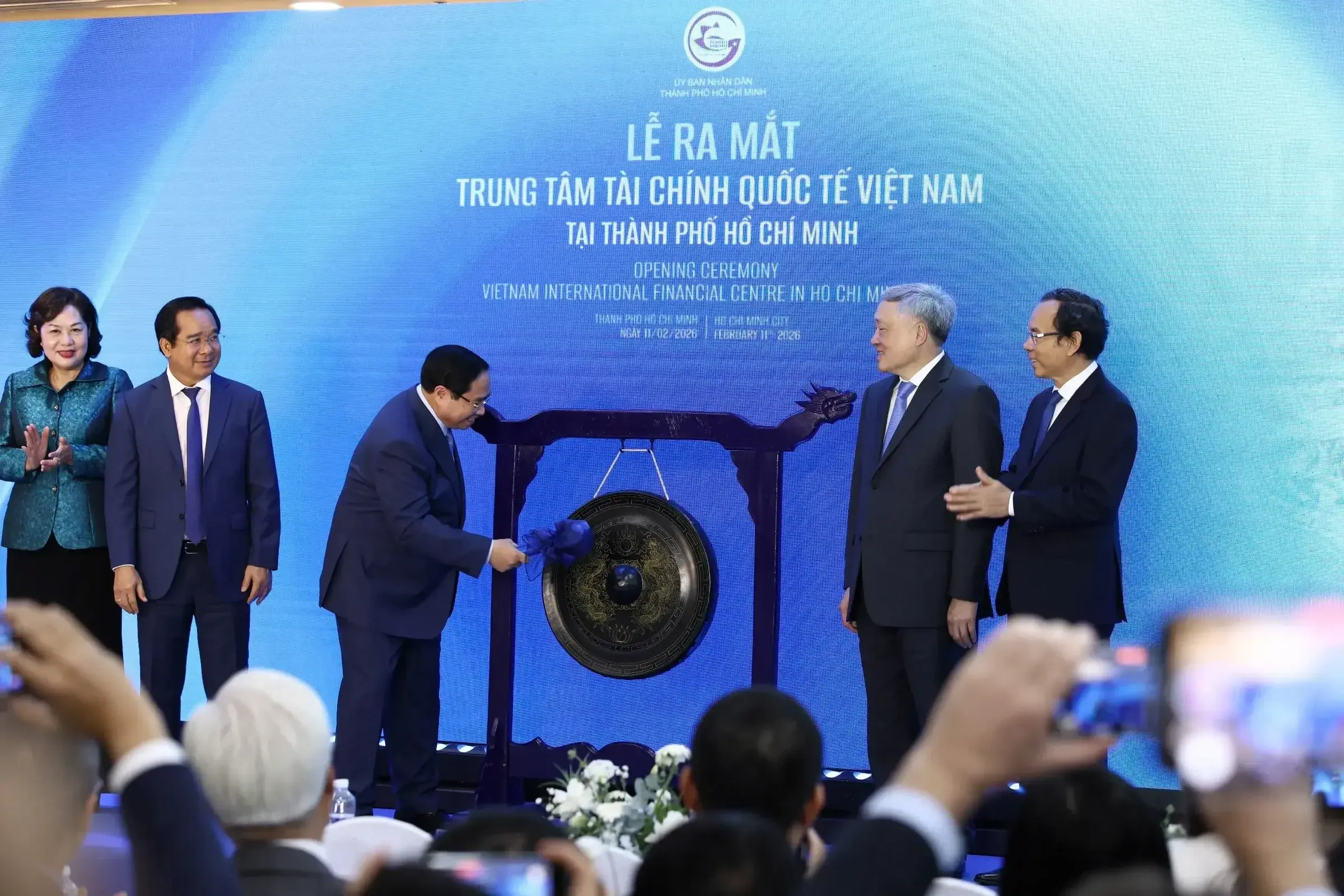

TCBS has just turned what still feels abstract to many retail investors into a very concrete capital decision. In a board resolution disclosed on May 29, the brokerage approved the establishment of a subsidiary at VIFC-HCM with planned charter capital of VND 800 billion.TCBS This is not an earnings story yet. But it is a clear signal that some large financial firms are already choosing where they want to stand before the new infrastructure is fully operational.
What matters is that TCBS is doing more than talking up policy potential. The company has approved a separate legal entity under a single-member limited liability structure, with TCBS owning 100% of the charter capital and placing the office within the VIFC-HCM zone.CafeF Once a company reaches this stage, it has moved from “watching the opportunity” to “preparing to participate.”
Why the number itself is not the main point
Taken in isolation, VND 800 billion is a large enough figure to generate headlines, but not enough to justify a valuation conclusion on its own. The more important detail is the business scope TCBS has registered for the new entity: securities brokerage, proprietary trading, investment advisory, underwriting and derivatives trading.TCBS In other words, this is the toolkit of a firm that wants to sit at the intersection of capital raising, product distribution and institutional trading.
The second key detail is the funding condition. TCBS says the actual capital contribution will only happen after the VIFC-HCM operator formally requests it and only in line with the applicable legal framework.TCBS That detail matters because it shows there is still an execution layer between the board resolution and real money being put to work.
That is why I read this as an early seat reservation. TCBS has chosen the legal structure and the business perimeter in advance so it can move faster once the system opens up further. But that system is not fully open yet, so today’s advantage is mainly a positioning advantage, not an earnings advantage.
What kind of opportunity VIFC-HCM could create
Under Decree 323/2025/ND-CP, Vietnam’s International Financial Centre is a unified legal entity operating in Ho Chi Minh City and Da Nang, with the goal of building a more advanced ecosystem for capital raising, investment, payments and financial-product trading.Chinhphu.vn From a policy angle, this is an attempt to create a framework with operating standards different from the rest of the domestic market. From a corporate angle, it is a place where early entrants can learn the process earlier than everyone else.
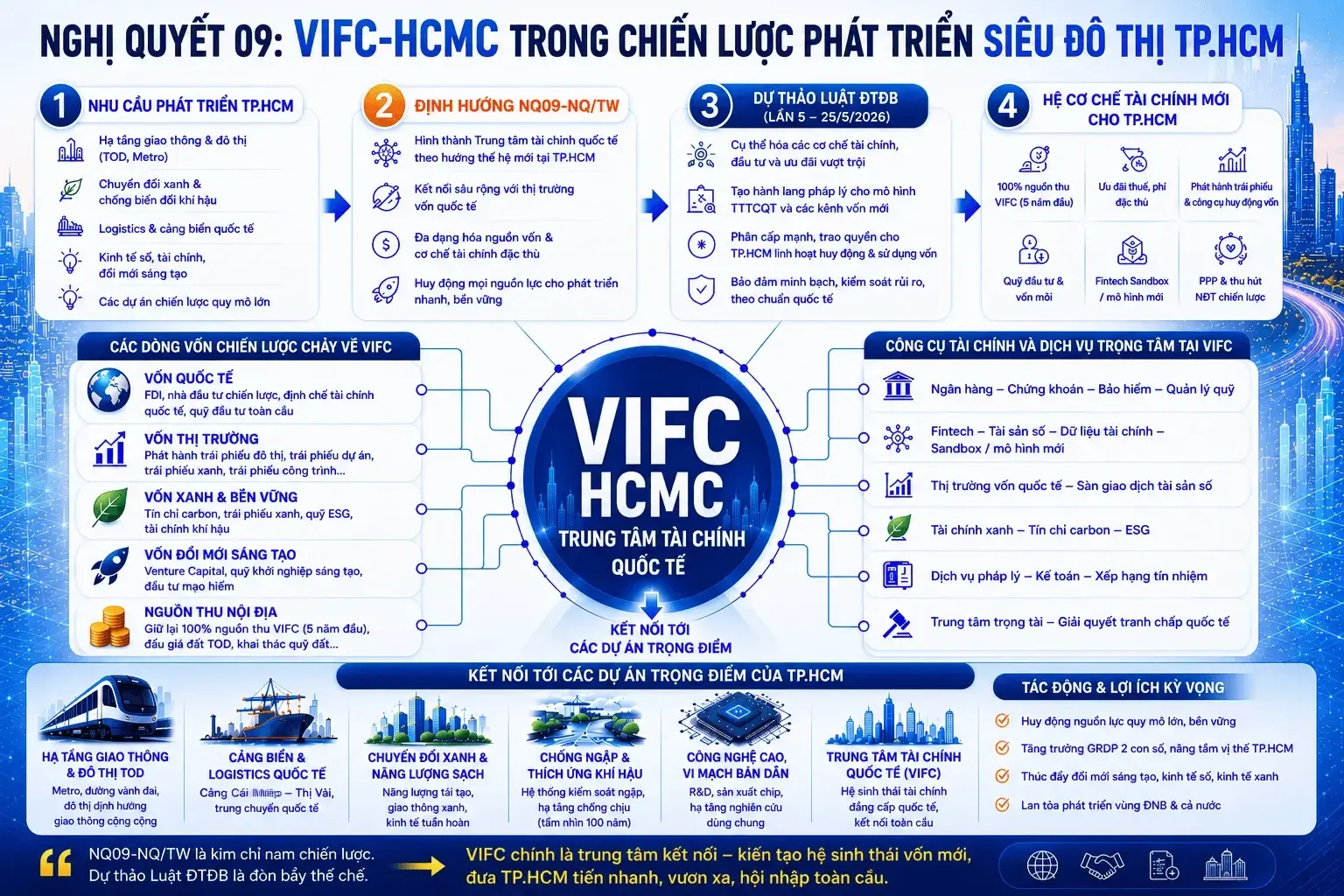
For a brokerage, the first-mover advantage does not begin on the stock board. It begins with where the firm sits inside the service chain. If a financial center wants to attract cross-border capital, the demand will not stop at equity trading. It also needs underwriting advice, product structuring, risk hedging, fund distribution and institutional client connectivity. The business lines TCBS has registered for the new entity cover most of that chain.TCBS
The second advantage is learning the rulebook early. Under Decree 324/2025/ND-CP, new investment projects in priority sectors inside the center may qualify for a 10% corporate income tax rate for 30 years, up to 4 years of tax exemption and up to 9 subsequent years at a 50% tax reduction.Chinhphu.vn But tax incentives are only half the story. The other half is whether a company can separate the business, book revenue properly and meet the operational conditions inside the center.
That sounds technical, but it is actually very practical. Policy only creates a more favorable boundary. Money only follows when a company turns that boundary into a service with real clients, real products and a compliance process that holds up.
Why this should not be treated as an earnings catalyst yet
The first risk is timing. In large policy narratives, markets often react quickly to the direction but revenue follows the implementation. Here, the gap between those two stages is still wide. Licensing mechanics, coordination between the center and member firms, and which products go live first are all questions that still need real-world execution to answer.
The second risk is that competition may arrive faster than many investors expect. TCBS is not the only firm that sees the opening. Saigon Times reports that HSC has also received shareholder approval to establish a VIFC-HCM subsidiary, likewise under a wholly owned structure and with charter capital of VND 800 billion.KTSG That means the advantage of “being early” will narrow quickly if multiple brokerages line up at the same time.
The third risk is conceptual. Investors often blur two different ideas: a company holding a potentially good strategic position, and a company already monetizing that position. The two are related, but they are not the same. Many capital-market stories look compelling at the idea stage and cool down once they move into execution because the process takes longer than expected.

So the disciplined reading is this: TCBS is choosing a position that could matter in the future structure of Vietnam’s capital markets. But that future only becomes a financial thesis once the company proves that at least one of the registered business lines can go live first, win clients first or generate revenue first.
What retail investors should watch next
For newer investors, a story like this often triggers two extreme reactions. One is getting excited too early because an “international financial center” sounds like immediate growth. The other is dismissing it because the story still feels far away. Both readings move too fast. A better frame is that this is an early strategic signal in the first stage of a much longer proof process.
On the tape, TCX closed on June 1 at VND 41,500 per share, down 1.19% for the session, while the VN-Index fell 1.02%. That reaction also makes sense. The market is not pricing this as an immediate earnings shift, and the current fact base is not strong enough to make that case either.
So what matters more than one day of price action? First, the date of the actual capital injection, because that will show the new entity has moved beyond preparation. Second, which product line launches first, because the first live service usually says a great deal about where TCBS expects to make money inside the new ecosystem. Third, whether the company later discloses separate revenue and profit for the new legal entity.

If those three signals appear in a logical sequence, today’s VND 800 billion decision may later look like a calculated early move in the reshaping of Vietnam’s capital markets. If they do not, the story will remain one of a company standing early inside a new framework without yet turning that position into economic returns.
My conclusion is straightforward: this is a strategic positioning move, not an earnings catalyst. The constructive part is that TCBS has gone further than most firms that merely say they are interested. What still needs to be watched is whether it can convert early position into product, and product into cash flow. That conversion path will decide whether VIFC-HCM becomes a meaningful story for shareholders, or simply a promising idea on paper.