

After a week that kept testing investor nerves, the most useful question is no longer which stock to buy right away. The better question is what your uninvested cash is supposed to do, and why it should not sit in a single pile. When equities, Brent crude and SJC gold all fall in the same week, the market is sending a simple message: cash-on-the-sidelines only helps if it stays flexible.
VN-Index ended the week around the 1,790-point area after losing about 2.6% from the prior weekend. Brent crude also slipped roughly 5.1%, while SJC gold ask prices fell about 3.2%. Those figures do not mean every asset class suddenly looks bad. They mean this is not the kind of backdrop where idle cash should be pushed into one all-or-nothing decision.

The easiest mistake for a new investor is to call every unspent dong amount “cash” and then assume it must either stay completely idle or be deployed the moment prices dip for a few sessions. In practice, waiting capital usually has three layers: money reserved for quick action if the market offers a cleaner entry, money that can sit out for a few months in exchange for yield, and true defensive cash that exists to keep you from making emotional bottom-fishing trades.
That is the core thesis here: after a volatile week, idle cash should be divided by function, not by mood. If the market still lacks a broad-based recovery signal, preserving the right cash structure matters more than trying to guess the exact bottom over the next one or two sessions.
Why idle cash should not sit in one place
The logic is straightforward. Money that may be needed within a few trading sessions should not be locked up with money you already know you will not need for several months. Once those two roles are blended together, investors tend to make mistakes on both fronts.
Bucket one: flexible cash waiting for better signals
The first bucket is capital that can be used quickly if the market starts showing a more trustworthy recovery. This is not money for chasing a single stock that suddenly spikes. It is money for responding when breadth improves across the market. If VN-Index can hold support, gainers start to broaden, and turnover improves on up days, that is when this bucket begins to matter.

Looking at the last 30 sessions, the 1,790-point area is an obvious psychological zone. But index level alone tells only half the story. The other half is the quality of the rebound: how many sectors join in, whether flows broaden beyond a handful of large caps, and whether turnover actually confirms the green sessions.
That distinction matters because a rebound driven by a few heavyweight stocks can make the tape look healthier than it really is. For new investors, a slower rebound with wider participation is usually more useful than a sharp one-day jump led by a narrow group.
Bucket two: capital that can sit out for yield
The portion of your cash that is unlikely to be needed immediately can look for a temporary home that pays something. On CafeF’s bank-rate data page updated on June 13, 2026, some banks were listing around 6.6%-7.0% per year for 6-month deposits, while certain 12-month tenors were around 7.0%-7.5% per year.CafeF VietnamNet also reported on June 12, 2026 that several online deposit tenors had moved sharply higher again in recent days.VietnamNet

Put simply, yield is the reward for waiting, while tenor is the price you pay for waiting. A 12-month deposit may look better on paper, but it does not fit money that might need to move back into equities if the market gives a cleaner signal in the next few weeks. Shorter deposits, or fixed-income products with clear withdrawal terms, are a better match for capital that is still waiting for confirmation, even if the quoted return is not the highest line on the board.
Bucket three: defensive cash that should stay untouched
The hardest part of managing idle cash is usually not finding a deposit with an attractive rate. It is preserving a truly defensive bucket. This portion is not there for rushed averaging down, not there to rescue a losing position, and not there to be deployed just because the market prints one green session. Its job is to protect your decision-making capacity, especially if the correction lasts longer than you originally expected.
What to watch next week before rotating cash back into stocks
This matters to your actual wallet far more than guessing the exact bottom in a single session. The first thing to watch is market breadth: are gainers expanding, especially on green days for the index. If the benchmark rebounds while most stocks still look weak, that is not a strong enough signal for flexible cash to move back in size.
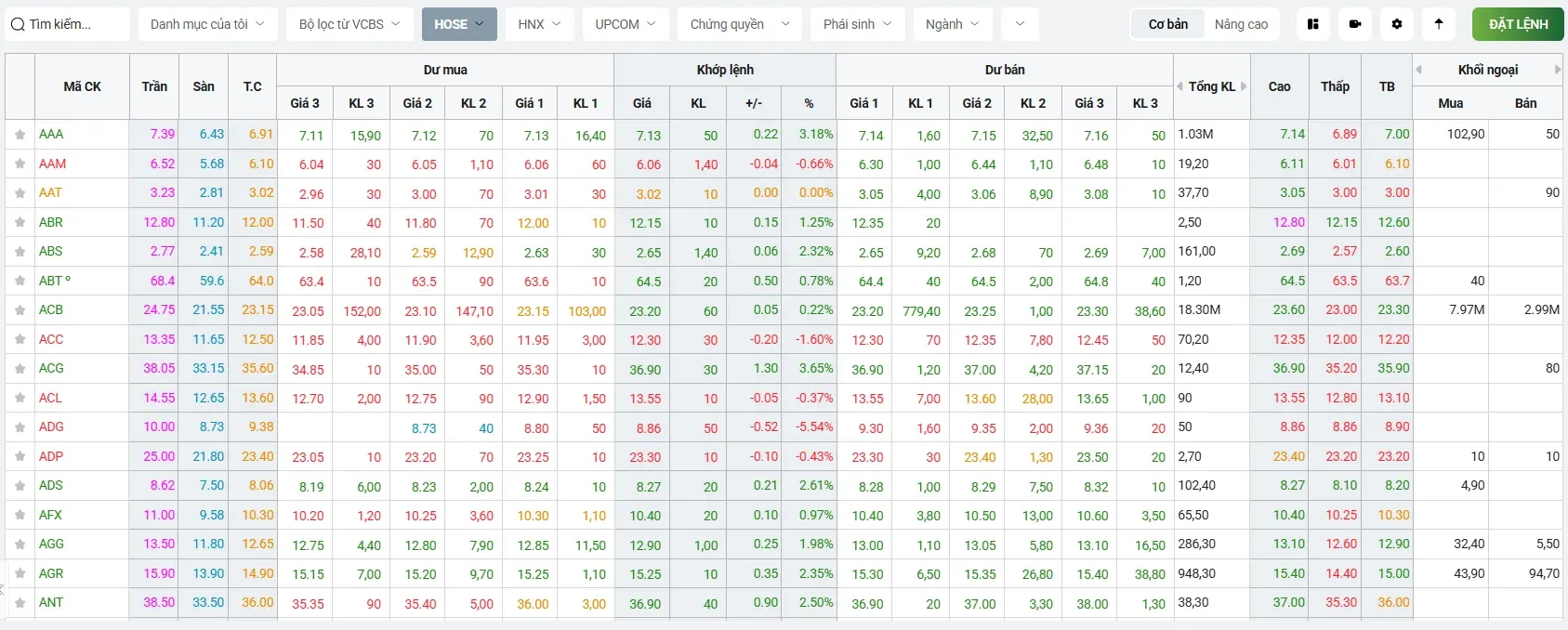
Second, watch whether turnover confirms the move. A healthier rebound typically needs actual money flow, not just a technical pullback bounce. If liquidity does not improve on up days, or if capital remains concentrated in a few large caps, the odds rise that the bounce is temporary rather than durable.
Third, be honest about your own time horizon. If part of the cash genuinely will not be needed before year-end, parking it in a yield-bearing product for a few months is not the same as “missing the market.” On the other hand, if that money is tied to a near-term equity plan, locking it away for a longer tenor just to earn a bit more yield is an unnecessary trade-off.
A simple framework for reviewing your own cash position
Instead of asking what to buy next week, newer investors can start with three narrower questions. First, which money may need to react within a few sessions if the market improves. Second, which money can afford to sit out for a few months and earn yield. Third, which money should remain untouchable if the tape stays noisy.
Once those three buckets are separated, decisions usually become far less emotional. You are no longer forced to choose between going all-in and staying completely out. Each bucket has a specific job, and each job only needs a simple trigger.
The key is not to turn idle-cash management into a short-term forecasting contest. The evidence today is still not strong enough to treat a multi-week decline as something that must be bought immediately with all waiting capital.
Conclusion
After this latest volatile week, the most useful takeaway is not whether gold, crude or equities look more attractive over the next few days. The clearer conclusion is that idle cash should be split into three buckets: one for flexibility, one for yield while waiting, and one for defense against rushed decisions. As long as any rebound still lacks broad participation and turnover confirmation, the sensible default for newer investors is to protect cash structure first, optimize yield second, and only then add back to stocks in stages.