
Dividend season has one number that knows how to pull beginners in: the payout ratio. In the June 15-19 week, around 40 listed companies are going ex-rights. Nearly 25 of them are paying cash dividends, with published rates ranging from 0.7% to 125%.CafeF Set against a market where the VN-Index last closed at 1,791.65 points after four straight weeks of declines, those names are naturally drawing extra attention.
The easy mistake is to read a high dividend as if it were a guaranteed gain about to land in the account. A cleaner way to think about it is this: a dividend is an entitlement detached from the stock, not free money appearing out of nowhere. That is why a busy dividend week should be read less like a yield leaderboard and more like a test of price mechanics, liquidity, and business quality.
The payout ratio is the easiest thing to notice
During dividend season, newer investors usually stop at the percentage column. That is understandable. A 125% payout jumps off the screen much faster than a note about the ex-rights date or the actual payment date. But in equities, the most visible number is rarely the one that decides the real outcome.
CafeF’s roundup for this week shows a dense ex-rights calendar and a wide spread in announced cash payouts.CafeF That does not automatically mean the stock with the bigger ratio offers the better setup. A lower-yield name with stable trading, orderly price behavior and a durable cash-generation profile may be easier to own than a headline-grabbing dividend stock that barely trades.
So the thesis here is straightforward: for beginners, dividend season should be read from mechanism to quality, not from payout ratio to buy decision. Skip that sequence and the percentage becomes a psychological trap.
The ex-rights date is where beginners misread the trade
The ex-rights date is the cutoff after which a new buyer no longer receives the entitlements attached to the stock, such as dividends or subscription rights.Vietstock Understanding that one point already helps avoid a common beginner mistake: buying right up against the cutoff while assuming any ownership automatically qualifies for the payout.
More importantly, the reference price on the ex-rights day is usually adjusted to reflect the value that has been detached from the company. With a cash dividend, part of the company’s cash is on its way out to shareholders. With a stock dividend, the share count rises and the price adjusts accordingly.APEC

Put simply, investors should not add the “dividend rate” directly to expected returns. Once the company pays cash or issues additional shares to existing holders, the market already has a mechanism to reflect that change. The right question is not “how much extra do I get?” but “after the price adjustment, what actually changes in the total value I hold?”
ACB shows why dividends never stand alone
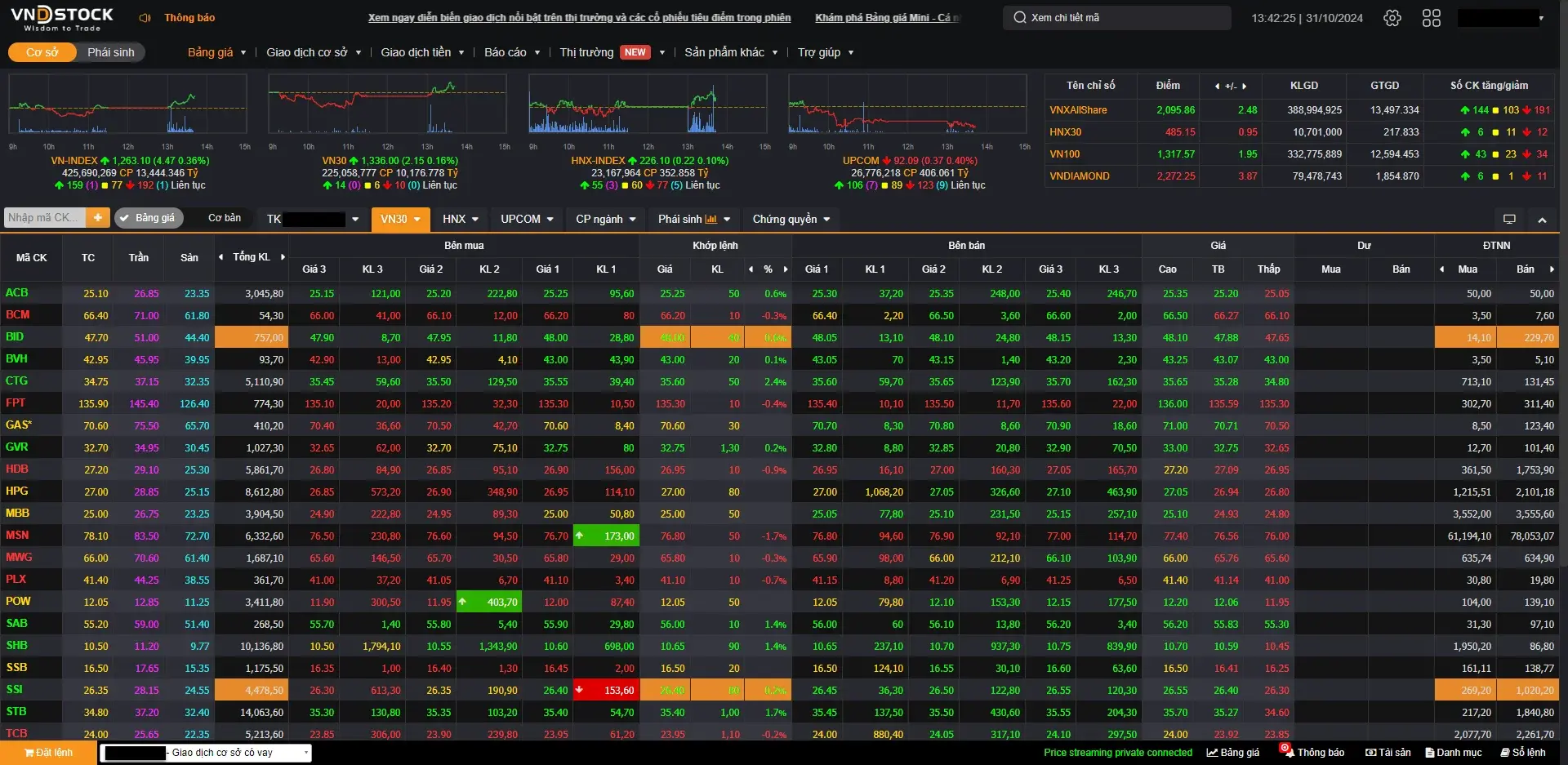
ACB is one of the more visible cases this week because its ex-rights date falls on June 15, 2026. The bank is paying a 2025 cash dividend of VND 700 per share and a stock dividend at a 100:13 ratio. CafeF also reports that the cash component alone will cost ACB roughly VND 3.5 trillion.CafeFCafeF
On the surface, that looks compelling. But with ACB trading around VND 26,500 per share in the latest database snapshot, the VND 700 cash piece should not be framed as a standalone gain. Part of the value is simply moving from the company to the shareholder, while the rest is reflected in the stock’s new price reference once it goes ex-rights.

That is also why the dividend can never be analyzed in isolation. For a bank like ACB, the more useful questions are about earnings quality, post-distribution capital, the durability of the payout policy, and how trading flow behaves after the adjustment. The dividend matters, but it is only one tile in a much larger banking mosaic.
What if the payout is high but the stock barely trades
Two other names this week show why a high ratio does not necessarily come with a better trading experience. IDP’s record date is June 22, 2026 and its ex-rights date is June 19, 2026. The company is paying a total cash dividend of 100%, equivalent to VND 10,000 per share. That consists of an 80% final dividend for 2025 and a 20% interim dividend for 2026, with payment scheduled for July 3, 2026.Vietstock
With the stock recently around VND 280,000 per share, IDP is clearly not “cheap” simply because a large cash payout is coming. Internal market data show sessions where trading volume was only around 1,000 shares, and at times there was no trading at all. In a case like that, the risk is not whether the company is paying. The real question is whether an investor can actually enter a decent position and get out of it when needed.
HLB is an even starker example. Its announced cash dividend rate for the June 15-19 week is 125%, equivalent to VND 12,500 per share.CafeF But the same data set also shows HLB trading around VND 450,000 per share, with many consecutive sessions recording zero volume. For a stock like that, the sensation of a “very high dividend” can hide a more important truth: poor liquidity is what decides whether a small investor can live comfortably with the position.

There are at least two plausible explanations for why a high dividend stock may still be a poor fit for beginners. One is that the underlying business is fine, but the float is so tight that the secondary market is too shallow for practical trading. The other is that investors are confusing the entitlement itself with the ability to realize a gain. Based on the evidence here, the stronger explanation is liquidity: the dividend is real, but the entry and exit path is too narrow.
A practical reading framework for the June 15-19 week
If this needs to be compressed into a working checklist, start with four steps. First, identify the ex-rights date and the record date correctly, because that is what determines whether the entitlement is still attached to the stock or already gone.Vietstock
Second, separate cash dividends from stock dividends. Cash gives shareholders real money, but it also reduces the cash left inside the business. Bonus shares or stock dividends increase the share count, but they do not automatically make the holder richer because the reference price adjusts for dilution.APEC
Third, go back to business quality. A one-off high payout funded by an unusual item is not the same thing as a company with recurring core earnings, healthy operating cash flow, and a sustainable distribution policy. Ignore that layer and dividend season quickly turns into a hunt for percentages rather than an assessment of value.
The last step is liquidity. In actively traded stocks, investors can at least watch supply and demand after the price adjustment. In thinly traded names, a high dividend can come bundled with position-trap risk. So the practical conclusion for the June 15-19 week is not to dismiss dividends. It is to put them back into the right context.
Dividends still matter because they say a lot about cash generation and distribution discipline. But for beginners, dividend season should not be understood as a race to find whichever stock “pays the most.” The more reliable takeaway is this: the most interesting dividend is not the largest one on paper, but the one that still makes sense after you account for price adjustment, liquidity, and the company’s ability to keep paying in later periods.